

Brahma the creator was once imprisoned by Lord Subramanya, Lord Shiva’s son, who felt the creator had failed to grasp the true meaning of creation. Later repenting his arrogance, Subramanya decided to atone and punish himself.
I stand before the temple built on the very grounds where that atonement played out: the Peralassery Subramanya Temple in Kerala. Located about 15 km from Kannur, the temple is an important part of the local life.. As with sacred spaces across South India, a soothing calm hangs in the air.
The monsoon has set in—a gentle, pitter-patter drizzle rather than a downpour—and the sun occasionally peeks out from behind gray clouds.
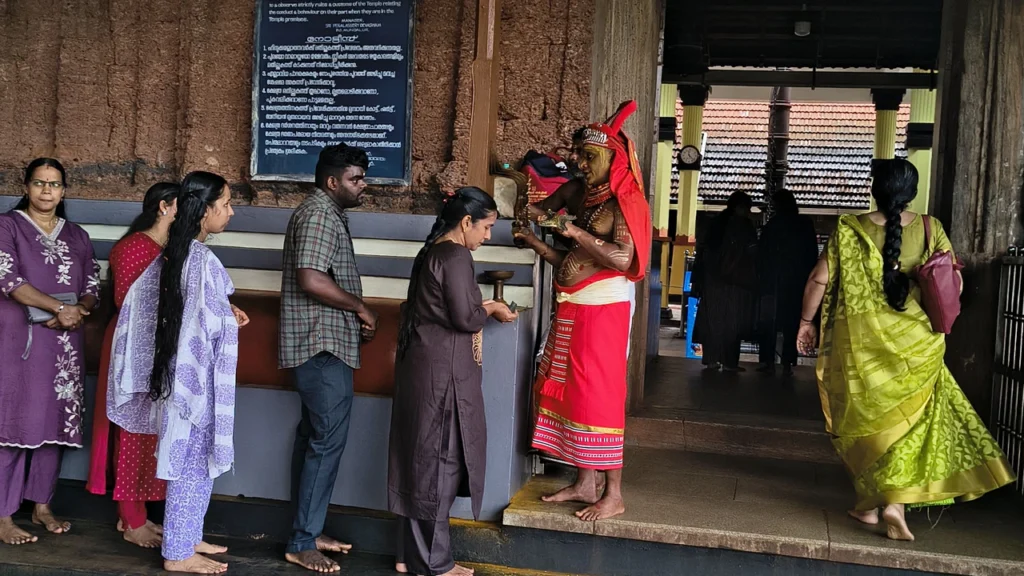
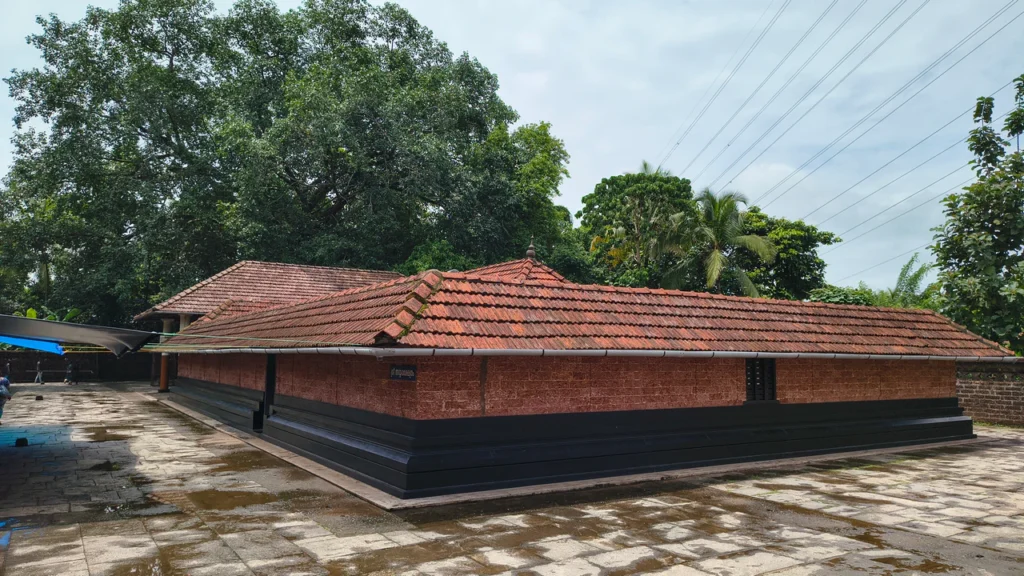
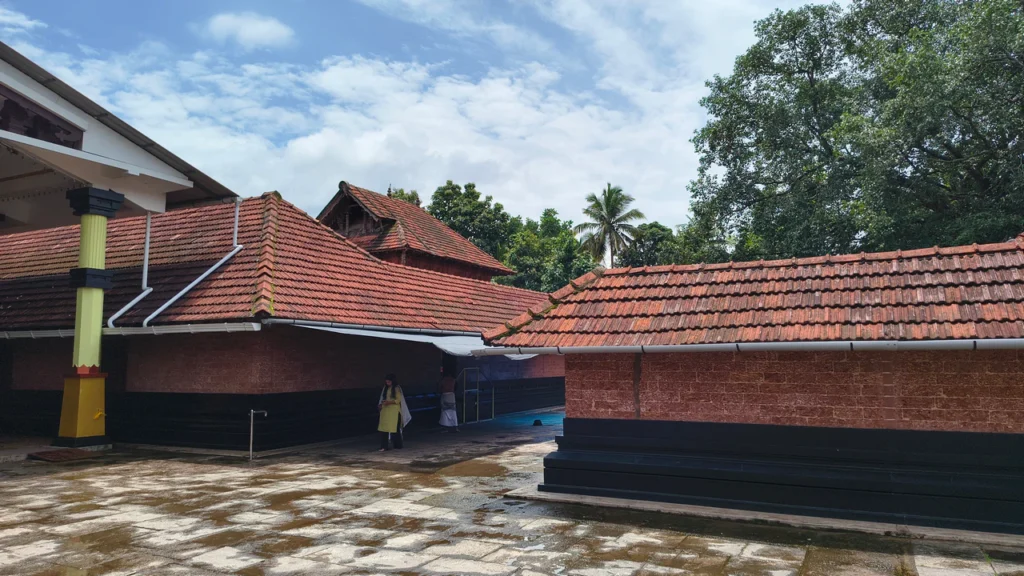
Stepping into the complex, one can feel peace as everything seems to slow down. Built in traditional Kerala temple architecture, a massive outer wall encloses a square sanctuary with sloping tiled roofs. At the outer gate stands a Theyyam performer in Muchilott Bhagavathi form , blessing the devotees who queue up. A living symbol of knowledge, justice, and divine feminine energy. ( Muchilott Bhagavathi is a revered goddess of North Kerala )
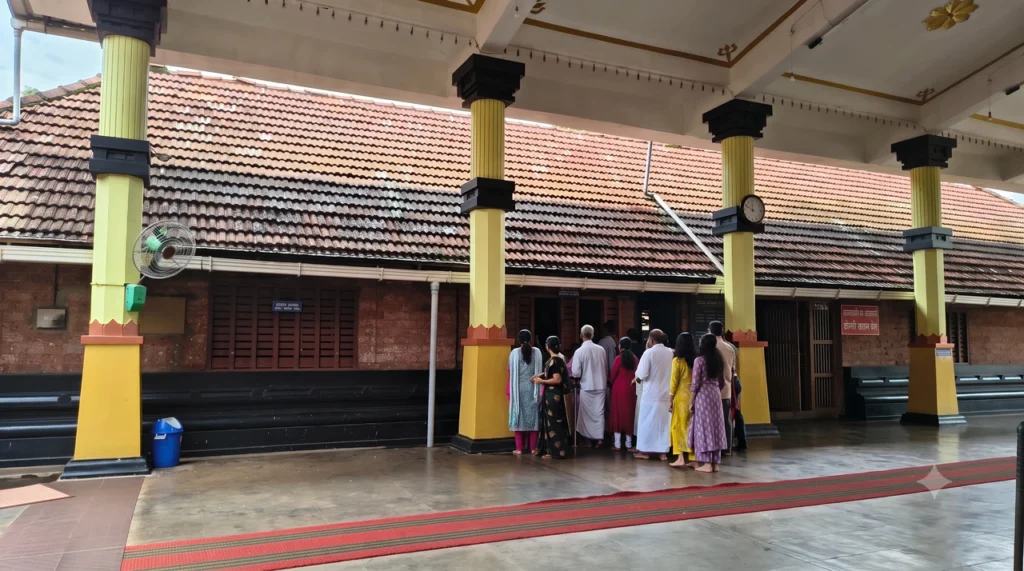
Inside, the sanctuary houses two primary shrines: the main sanctum dedicated to Lord Subramanya and another to Lord Ayyappa. Devotees familiar with the sacred rituals head toward a corner with a unique offering: hen’s eggs. It is a rare practice that stems directly from the temple’s founding lore.
Peralassery Subramanya temple : The Legend
The legend begins with an encounter between young Lord Subramanya and Lord Brahma. When Subramanya asked Brahma to explain the cosmic syllable “Om,” Brahma’s explanation fell short. Convinced that Brahma was unqualified to govern creation, Subramanya imprisoned him and took over the universe. However, Subramanya created only good, disrupting the cosmic balance.
At the gods’ behest, Lord Shiva intervened. Subramanya agreed to release Brahma on one condition: Shiva himself had to sit as his student and learn the true essence of Om. Shiva agreed, earning Subramanya the title Swaminathan—the teacher of the Master.
Realizing the gravity of his misadventure, Subramanya journeyed to Peralassery to atone. Taking the form of a serpent, he made a deep well his home until his penance was complete.
Centuries later, Lord Rama, Lakshmana, and Hanuman passed through here in search of Sita. Sensing Subramanya’s divine presence, Rama resolved to consecrate a shrine. Hanuman was sent north to fetch an auspicious idol, but when the auspicious muhurat (time) neared without his return, Rama removed his royal bangle (Peruvala) and consecrated it instead. When Hanuman returned and attempted to replace it, the bangle remained immovable, shielded by a hooded serpent. Rama recognized the divine will, and the settlement came to be known as Peruvalassery which was later shortened to Peralassery.
To this day, the serpent form remains central to the temple’s identity, where devotees offer milk and eggs at the sacred snake pit (Nagarukavu).
The Stepwell Surprise
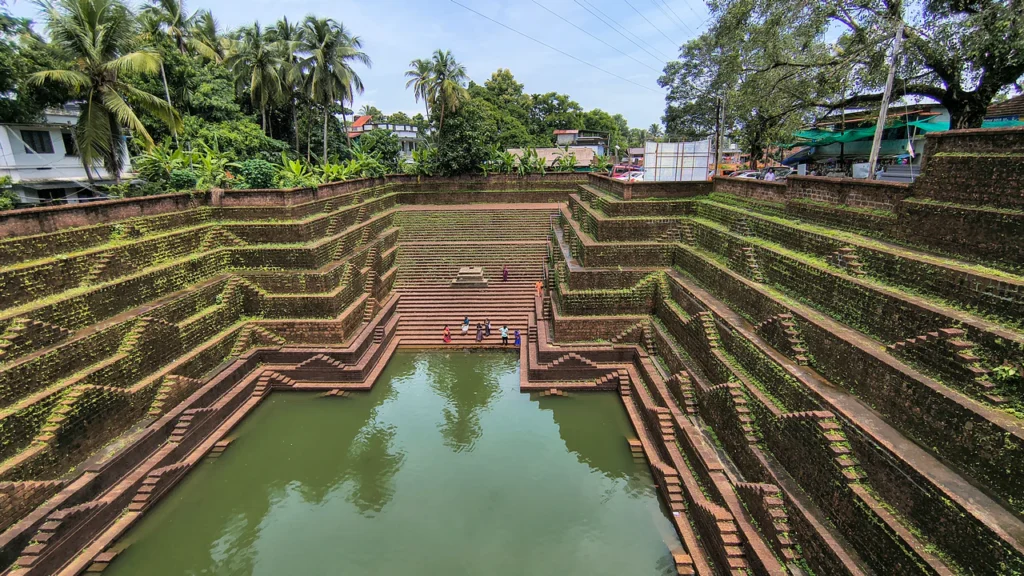
Outside the temple walls lies another marvel: a grand, multi-tiered stepwell (Chira). Unlike the simple rectangular pond standard in Kerala temples, this vast pond features intricate, geometric step architecture reminiscent of the stepwells of Gujarat and Rajasthan. They were more water conserving structures than anything else in the dry summers up north. This stepwell is a rare sight in the rain-soaked landscapes of South India.
The rain has stopped and a playful sun is out. The rays are soft as if tempered down by the rain and the clouds. The Theyyam character is still standing at the gate blessing men and women before they enter the temple.
We head for the next leg. This will take us to a few more of those special temples that dot North Kerala. This trip has everything beaches, rains and football fever in the green and laid back villages of Kerala.


Good