A look at the most Ancient temples of India
For centuries, Indian society has been rooted in the belief that the Divine manifests in multiple forms. Across the subcontinent, temples have long served as the spiritual and cultural cornerstones of this faith. With every era, God has been worshipped in various ways, influenced by regional identities and the evolving fabric of society.
While temples have always been centers of devotion, they also became crucibles for culture and creativity. Over time, this rich belief system gave rise to distinct art forms, diverse musical genres, classical dance styles, and a vast wealth of sculpture and architecture. Few civilizations in the world can claim such an expansive and enduring cultural legacy. To explore all of it would take more than a lifetime.
India is home to millions of sacred sites, but this article takes a closer look at four of the oldest temples in India, examining them not just for their religious significance, but for the breathtaking ancient temple architecture and cultural brilliance they embody
The Legacy of Indian Temple Architecture
The evolution of ancient Indian temples mirrors the artistic genius and engineering prowess of bygone dynasties. From rock-cut marvels carved into living stone to hilltop shrines defying harsh Himalayan elements, these monuments are masterpieces of design, mathematics, and devotion.
4 Ancient Indian Temples That Defied Time
1. Mundeshwari Temple, Bihar – The Oldest Living Temple in India
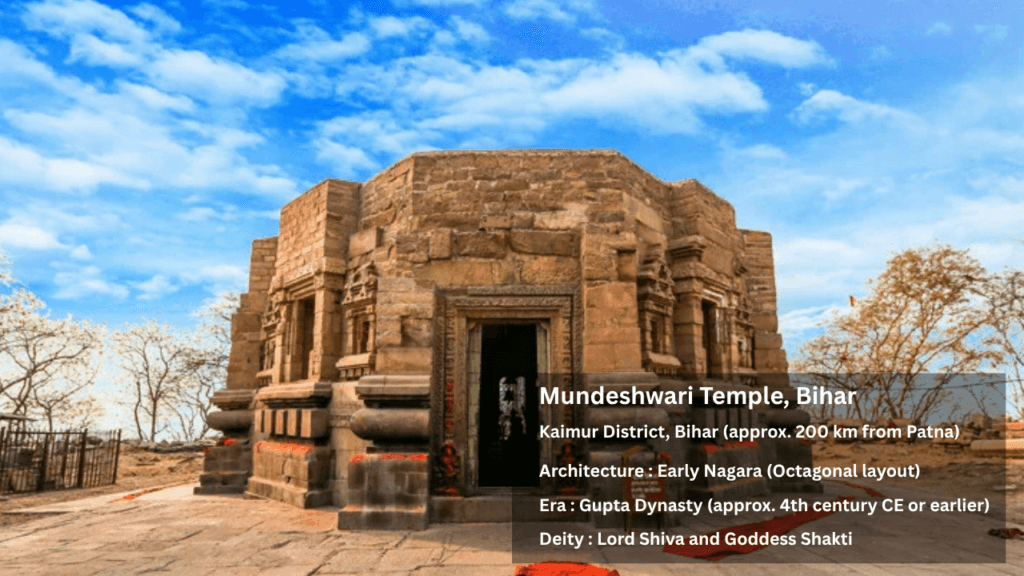
Perched atop a hillock in the Kaimur district, the Mundeshwari Temple stands as a remarkable testament to antiquity. Archaeological studies and inscriptions suggest that the core structure dates back to the Gupta Dynasty around the 4th century CE. However, findings such as a royal seal linked to Sri Lankan King Dutthagamani (100 BCE) hint at an even older origin, making Mundeshwari Temple history a fascinating subject for historians.
The octagonal structure, built in the early Nagara architectural style, reflects design elements later seen in iconic sites like the Sun Temple of Modhera and Jageshwar Dham. Despite centuries of weathering and renovations, daily rituals are still performed here uninterrupted, making Mundeshwari the oldest continuously worshipped temple in India.
2. Kedarnath Temple, Uttarakhand – Resilience in the Himalayas
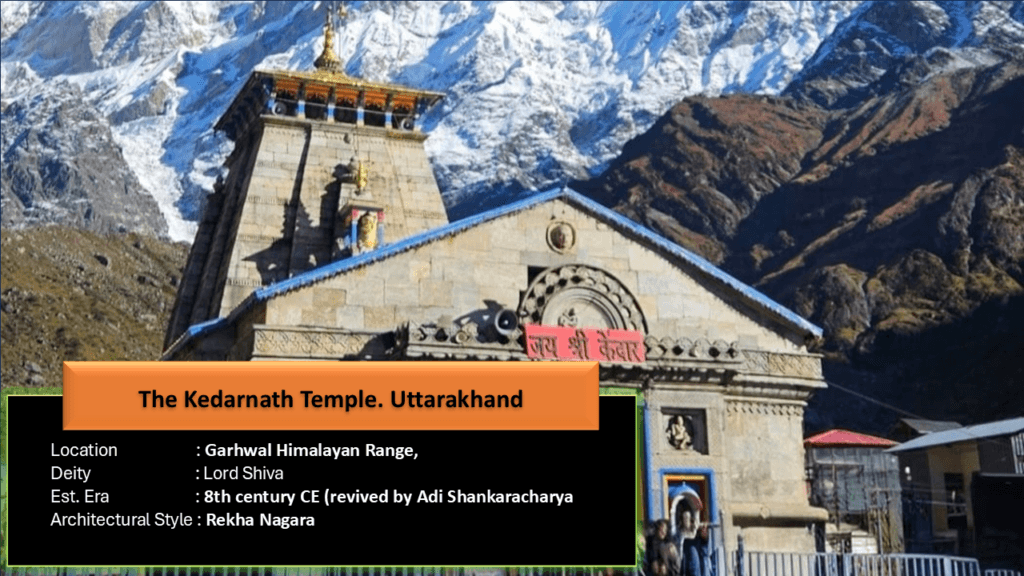
Perched amid majestic Himalayan peaks, the Kedarnath Temple is an enduring symbol of faith and resilience. Although deeply steeped in legends from the Mahabharata, the existing structure is attributed to the 8th-century philosopher-saint Adi Shankaracharya. The actual age of the temple is still a matter of speculation.
Constructed in the Rekha Nagara style, the temple features towering curvilinear spires and massive stone blocks. Remarkably, these grey stones are interlocked without mortar and secured with iron clamps—an astonishing feat of ancient engineering given the temple’s extreme location in a glacial zone. As a vital stop on the Char Dham Yatra alongside Badrinath, Gangotri, and Yamunotri, Kedarnath’s mystical ambiance connects it deeply to India’s epic past.
3. Shore Temple, Mahabalipuram – Sculpted by the Sea
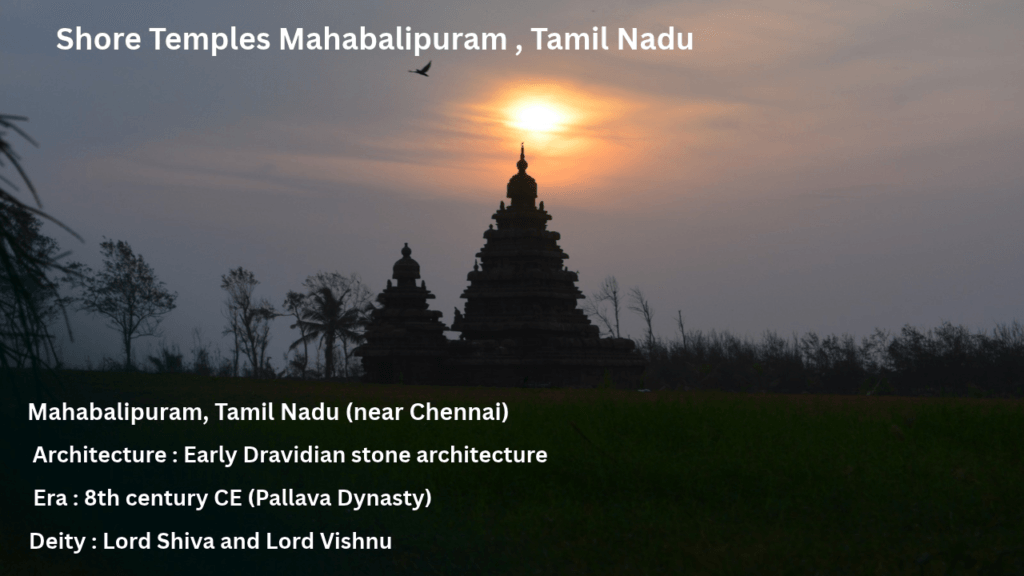
Located right on the shores of the Bay of Bengal within a UNESCO World Heritage Site, the Shore Temple stands stoically against sea winds and tides. Built during the reign of King Narasimhavarman II of the Pallava dynasty, it represents one of the finest early examples of structural Dravidian architecture crafted from cut stone.
The temple complex showcases intricate carvings depicting Hindu mythology and daily life during the Pallava era. Despite enduring centuries of cyclones, salt-laden coastal gales, and the devastating 2004 tsunami, the structure has survived. Local folklore suggests that other structures from the original temple complex lie submerged off the coast, adding an aura of maritime mystery to the site.
4. Kailasa Temple, Ellora – A Monolithic Masterpiece
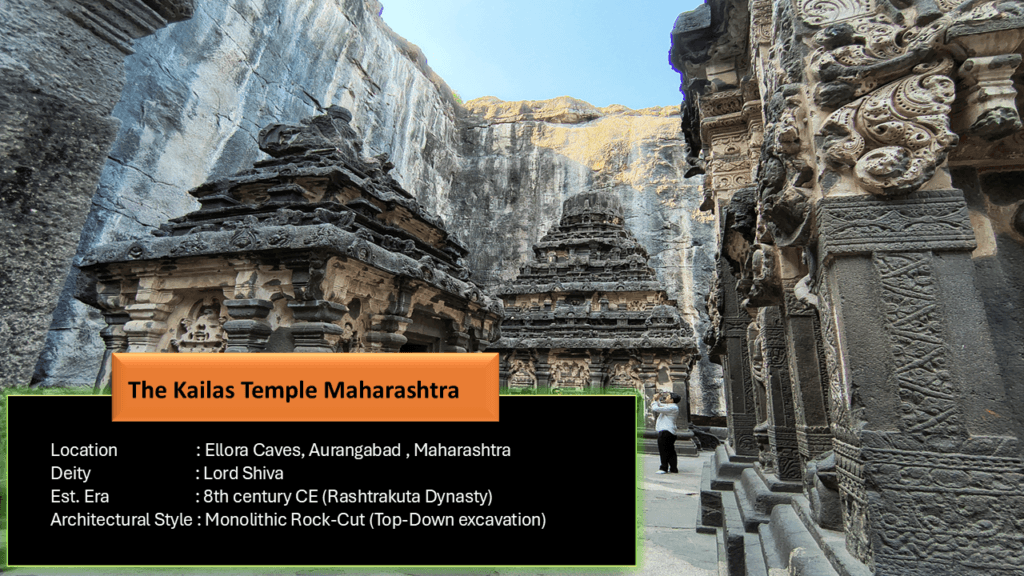
Perhaps the most astonishing of them all, Cave 16 of the Ellora Caves, the Kailasa Temple is a true marvel among monolithic rock-cut temples worldwide. Commissioned by King Krishna I of the Rashtrakuta dynasty in the 8th century, this entire multi-tiered complex was carved top-down from a single massive basalt cliff.
An estimated 200,000 to 400,000 tonnes of rock were excavated to sculpt the courtyard, towering spires, massive pillars, multi-story corridors, and detailed sculptural panels. Blending Chalukya and Pallava styles, its walls vividly narrate episodes from the Ramayana and Mahabharata. As part of a complex of 34 Buddhist, Hindu, and Jain caves, Kailasa epitomizes ancient India’s cultural synthesis and artistic zenith. ( Read the travelogue here )
Echoes of Eternity: Temples That Came Later
These ancient masterpieces laid the foundation for structural and sculptural innovations that flourished in later centuries across the subcontinent. They paved the way for monumental wonders such as:
- The Brihadeeswara Temple in Thanjavur, Tamil Nadu
- The Lingaraja Temple in Bhubaneswar, Odisha
- The Meenakshi Temple in Madurai, Tamil Nadu
- The Sri Ranganathaswamy Temple, Srirangam, Tamil Nadu
Each of these later marvels continues an unbroken legacy of spiritual grandeur and artistic brilliance. But those are stories for another time.