
This weekend, we were at a friend’s farm in the hills of Chiplun. It was a long-overdue trip. I had been planning to join a few of my friends, but never found the time to get over to Pune before joining the gang on their annual pilgrimage to the Konkan.
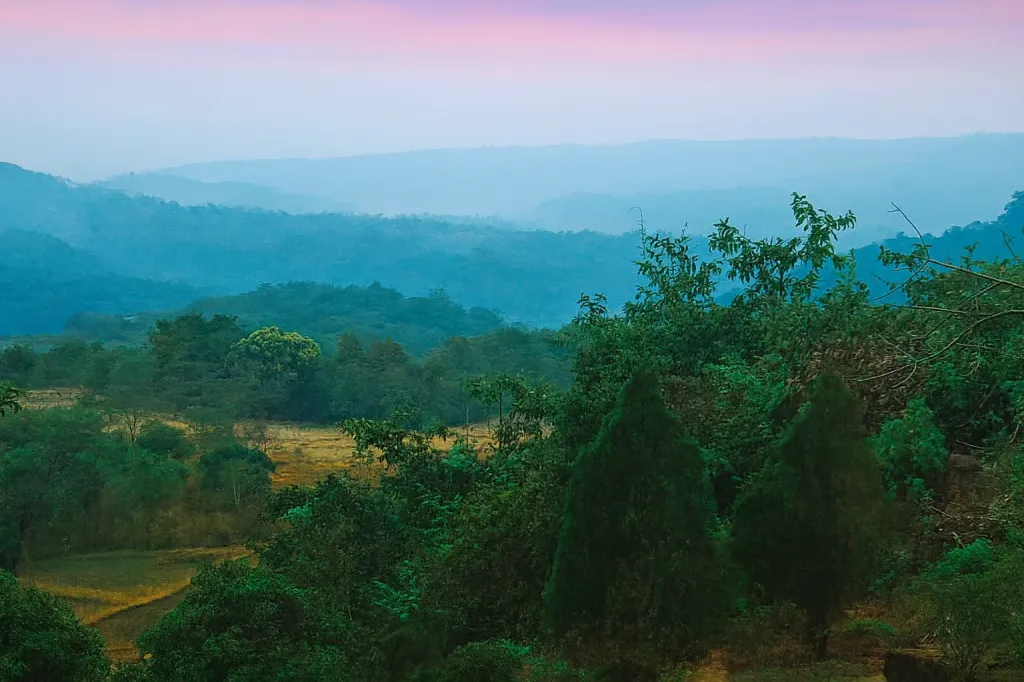
The destination was a farm up in the hills of the Western Ghats, which rise from the west coast and dip away into the hinterland. The farmhouse is built on a hill, and it takes some off-roading to reach. As the car snakes up through the bushes and trees that stand in silence, one wonders what it looks like from the hilltop.
The view from the top does not disappoint; it is stunning. The hills of the Sahyadri stretch out into the distance, wave after wave. A haze that comes with the winter air hangs around as the rolling hills melt away into the horizon.
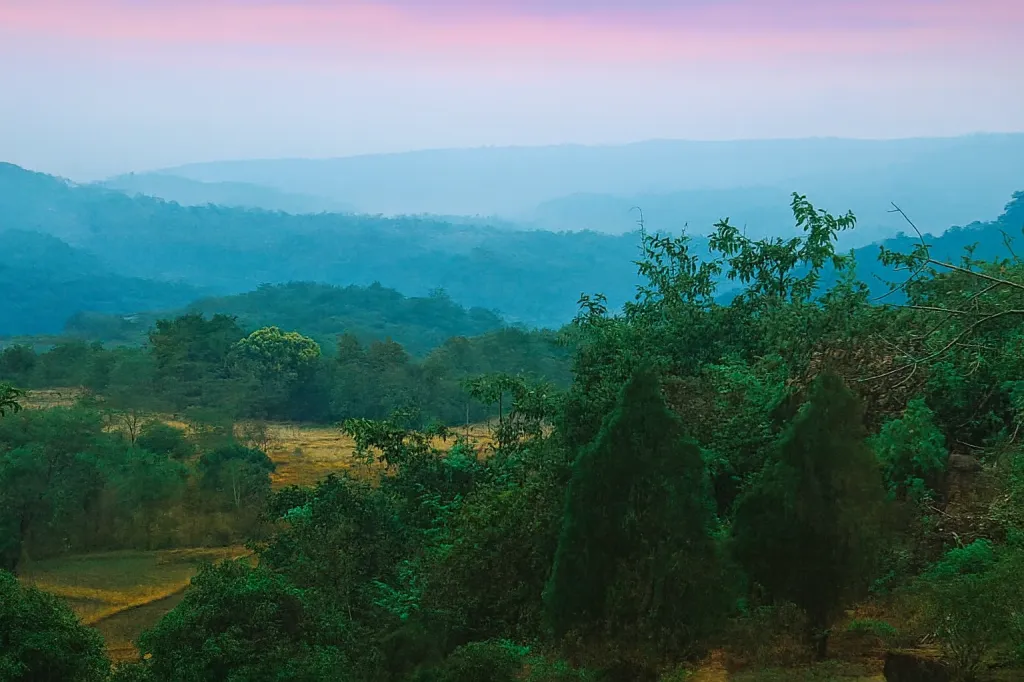
There is very little human habitation in the area. A few villages dot the mountains, each with a population that might just reach three figures. They have been around for years. All of them are farmers, and as is often the unfortunate case with farmers in India, I suspect they just scrape through. Yet there is an evident simplicity about life here. They live with less, and there is an unhurried rhythm to the countryside.
They could certainly do with some basic amenities like accessible healthcare and better support for agriculture.
The setup is simple: a village temple, a headman, and a few villagers who go about their daily routines at an unhurried pace. They work their shirts off in the fields, grow their grain, nurture the cattle and poultry, and have vegetable patches around their houses. The village is spanking clean, and the villagers are proud of it.
Life’s needs are all within that small world. There are cashew plantations, mango orchards, and what not on those hills.
This is the real India. Life in the slow lane. Simple, rustic, and no-frills. For a city-bred person like me, this is paradise.
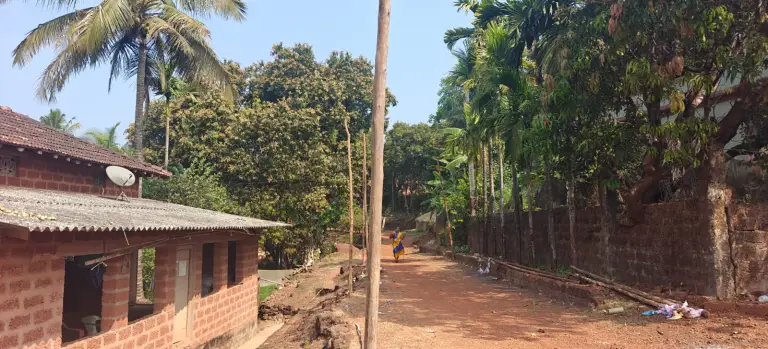
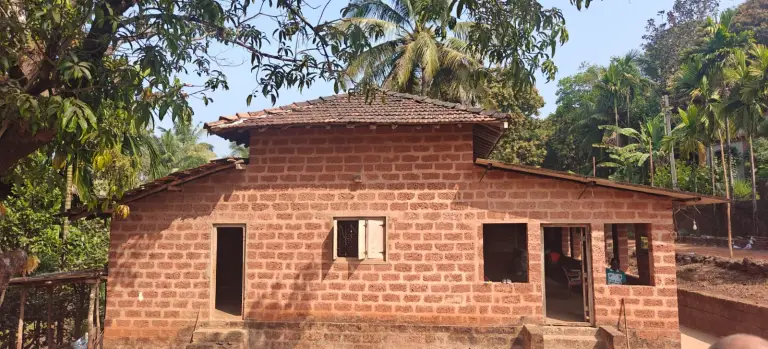
I knew there were going to be stories, and plenty of them. Every moment is a surprise. Something routine for them is a surprise to me. We were being assisted by a young man, a busybody who seemed to be everywhere in that area, checking on people’s comfort, water issues, and almost everything that came up in this world of his.
Having ensured that we had everything we needed for the night, he left us with a piece of advice:
“Stay indoors.”
The reason stunned us.
There are leopards around, he informed us, rather nonchalantly. He went on to explain how, in the last few weeks, they had lost some cattle to the leopard’s hunger. Thankfully, the leopard had killed no humans.
We heard it, but I for one did not give it much thought at that moment. The gravity of the statement and the depth of the situation were to dawn on me later. It turned out there indeed was trouble in the air.
We settled down for the evening. The weary sun turned crimson and slowly disappeared behind the hills. Soon, darkness descended. It was a kind of pitch-black darkness. There was not a shred of light out there, and the word ‘darkness’ took on another dimension. A black blanket wrapped around the house.
The lights in the house were the only solace. We lit a few logs to keep the darkness and the cold out, then got on with a catch-up.
A few stories from a lifetime of friendship and a few songs lightened the mood, and we forgot the chill of the night.
The balcony we were seated in has an iron grill around it. It remained tightly bolted and stayed locked. In the back of our minds, we knew that the Bibtya, the Marathi word for leopard, might be out there.
The lingering thought was disturbing, but the grill gave us a sense of security. I am not sure if that was a true or false sense of security. We never saw or heard him, but it is one sight I would not regret missing on that dark, sloping hillside.
Elsewhere, the villagers must have been asleep by now, resting to pick up the hard grind the next morning. There might just be one thought and one hope they nurture: that they and their cattle survive the night.
It is no longer a tranquil night; it is a nervous world. The paradise has a threat, and it is real.
This is another instance of the human-animal conflict that we all keep hearing about. Rampaging elephants in Kerala, tigers in Uttar Pradesh—the list is endless. Pesky monkeys in urban landscapes are so usual that they are hardly mentioned.
As forest spaces shrink, the conflict rears its head. The flatlands around the hills are seeing mushrooming human populations. This drives wild animals deeper into the cover and higher up the mountains. Changing weather and loss of habitat then force them back towards human habitation in search of food.
One wonders whether this will ever slow down and how it will play out. The signs are definitely not encouraging.
At the end of it all, as has been seen over centuries, humans always win. The animals stand no chance against the damage that humans are capable of inflicting. Once the threat escalates, a hunt will begin. Over a few centuries, a species will either become extinct or be pushed to the brink of extinction.
The world has seen this frenzy before. Animals like the Tasmanian tiger, Javan tiger, and Japanese wolf were hunted to extinction because they were perceived as threats to farming and livestock. Some of these killings were aided and carried out by governments to begin with.
Over the next two days, almost every conversation with the villagers had a mention of the Bibtya. The daytime was spent peacefully among smooth rivers, babbling brooks, and cashew farms. It is when night falls that the threat of the leopard comes right back.
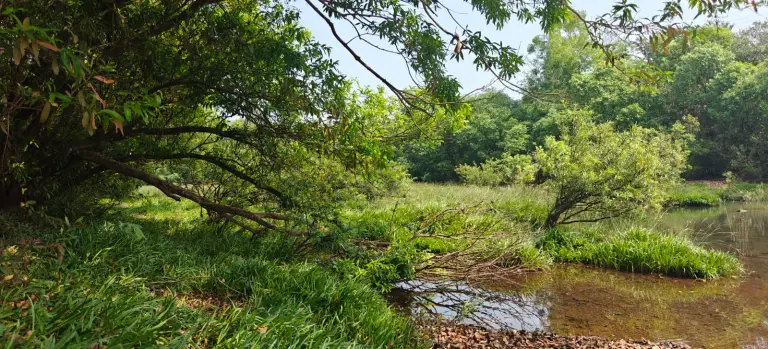
The villagers stay indoors. The world outside is left to the leopard and his hunt for food in the night.
While what happens over the next few decades may be unstoppable, at this moment, one can only hope that everything turns out well for the villagers.
And yes, for the Bibtya, too.