
The River That Built a Civilization
I am in Tamil Nadu, near Trichy, as I drive around trying to soak in the history of the Tamil heartland.
Nothing dominates the Tamil ethos more than the River Cauvery. Born from springs in the misty hills of Kodagu in Karnataka, Cauvery twists and turns for almost 800 km through Southern India before flowing into the Bay of Bengal.
It is not just another river; it is both a natural and cultural lifeline of this part of the world. It flows serenely, shaping landscapes, livelihoods, and legacies across southern India. A silent witness to the rise and fall of dynasties. A benevolent source of water as civilizations thrived along its journey. It is, in many ways, everything this land is about.
I am on the way to Thanjavur to see the Chola architectural marvel, the Brihadeeswarar Temple (read the travelogue here). About thirty kilometers from Trichy, with an hour to go before Thanjavur, I reach Kallanai.
A Village Called Kallanai: The Gateway to an Ancient Marvel
Kallanai is a small village nestled on the Cauvery, where the northern distributary of the river, the Kollidam, separates and veers away to the north. It is here, nearly 2,000 years ago, that one of the most interesting Chola kings, Karikala Chola, decided to do something that changed the destiny of this land.
All this occurred between approximately 100 and 150 CE. It helps to know about Karikala Chola’s life before we proceed to the importance of Kallanai.
Karikala Chola: The Legend of the Prince Who Built the Kallani Dam
No precise records survive of his lifetime; however, Sangam literature suggests that Karikalan lived in the 1st or 2nd century CE. His father, Ilamcetcenni, a formidable Chola ruler, was assassinated when Karikalan was still a boy. The rival clans never wanted a child to become king and tried to have him killed. But the clever and resourceful young prince evaded their grasp, living incognito as a Vedic scholar while secretly training under his uncle to reclaim his destiny. Eventually, he was tracked down and confined to house arrest.
This time, the enemies decided to end it all. They set the dwelling ablaze. Amid the chaos, the prince managed to escape. However, the fire left its mark: a deep, black scar upon his leg. From that day, he bore the name “Kari-Kalan” (kari for charred and kalan for legged) or the prince with the charred leg, an enduring testament to his resilience and survival.
He went on to recapture his kingdom, stave off attacks from neighboring kingdoms, and establish a magnificent realm. A land that thrived on trade, agriculture, and social order, led by a resourceful, brave, and visionary king.
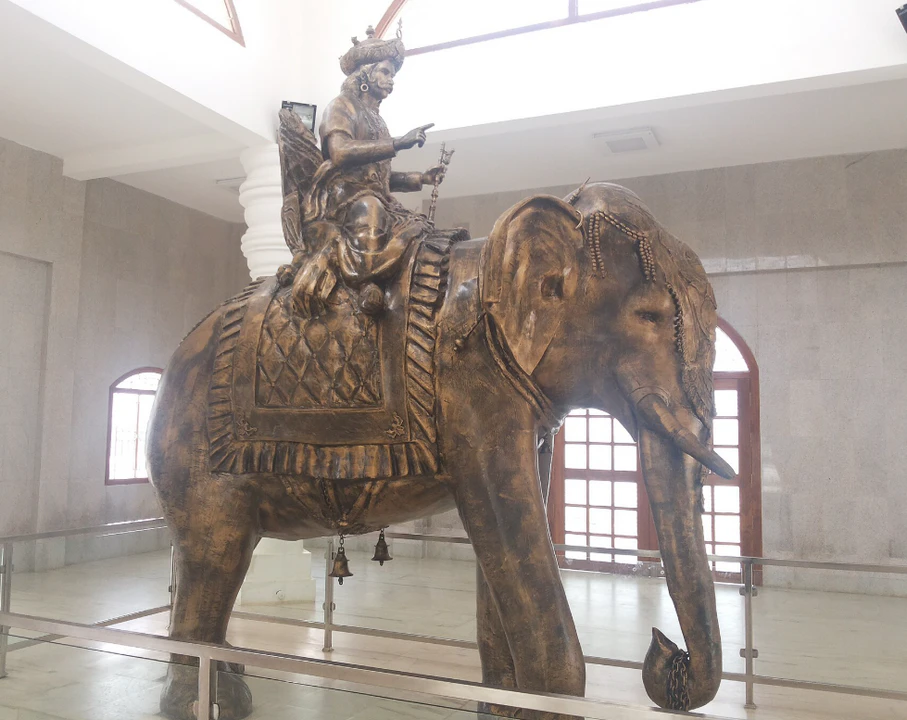
Building the Karikala Chola Dam: An Ancient Engineering Feat
Let’s return to Kallanai now.
Picture the Cauvery in full flood nearly two thousand years ago—a wild, untamed river racing towards the sea. Most would have accepted its fury. Karikala Chola chose to change its course.
The idea was extraordinary. Executing it was something else altogether. There were no modern cranes, concrete mixers or engineering drawings to guide the builders. What they had was stone, human labour and an understanding of the river that had been built over generations.
This small, nondescript village is home to the Grand Anicut, as it is known today. It was here that Karikala conceived an idea that must have sounded impossible in his time. The Cauvery was then a mighty river, rushing furiously from the Western Ghats towards the Bay of Bengal. Instead of fearing its power, Karikala decided to harness it. He chose to build a dam across the river and divert its waters to support farming.
Just where the Kollidam split off, he constructed a diversion using uncut rocks. Constructed even as the river continued to flow, the idea was to divert the water into canals to facilitate irrigation. The stones were held together by lime, mud, and jaggery. An ingenious method that kept the wall of rocks strong.
For anyone wondering what jaggery does in all this, here’s the answer. Jaggery, when mixed with lime, ferments, which then helps in the carbonation of lime, increasing the compressive strength and binding properties of mortars. It also helps delay the setting time, giving builders enough time to continue construction even in flowing water.
An idea ahead of its time, one that has endured for almost 2,000 years.
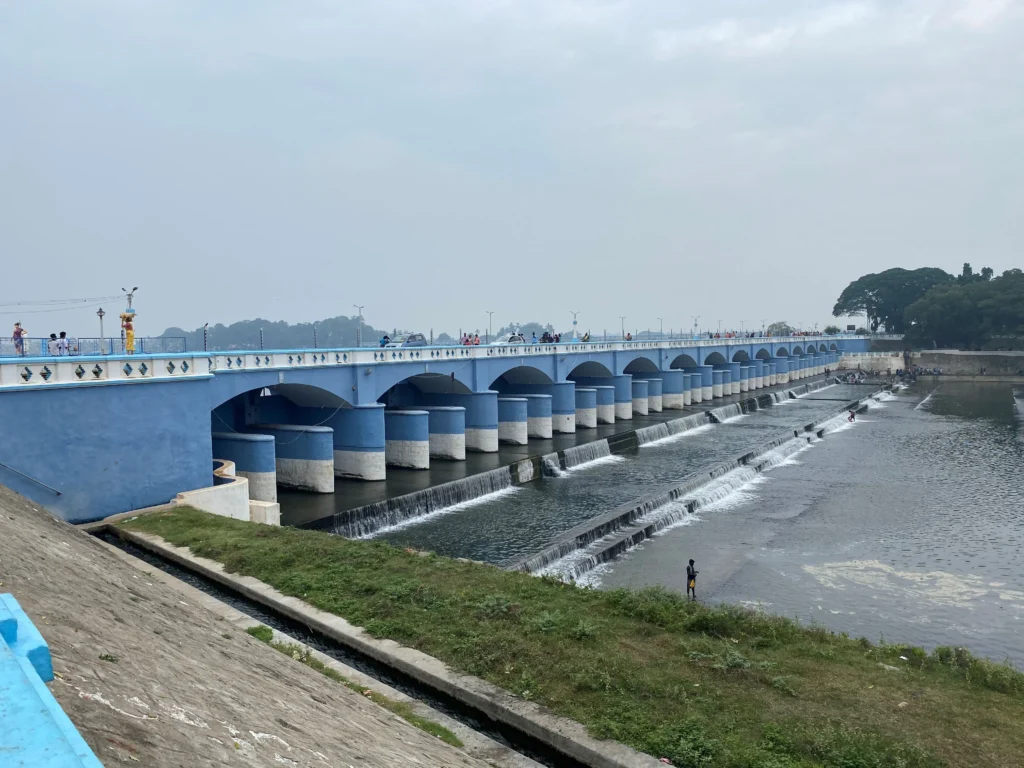
The Karikala Cholan Dam Legacy: Irrigation Across Two Millennia
Karikala’s grand vision ensured that approximately 70,000 acres of fertile land received a fresh lease of life, and agriculture flourished. Many rulers who followed ensured that the Grand Anicut survived. It was the lifeline of the land and had to be preserved. The local government continues to maintain it and ensure it remains functional.
Today, the idea that was outrageously conceived and bravely executed centuries ago irrigates almost 1.3 million acres of land. That is a legacy few rulers can claim.
The Kallanai (literally, the “stone dam”) stands proudly as a reminder of a past that was ingenious. Ideas that were simple, inventive, and remarkably effective.
History, Legend, and Reality of the Grand Anicut
There is minimal historical reference about Karikala to go by. Works from Sangam literature, like Pattinappalai and Cilappatikaram, remain our principal sources. They describe a kingdom that prospered through flourishing trade and agriculture. Most of these works, however, were written around 300 CE and later.
Some of them refer to Karikala Chola’s northern campaigns and conquests. They give a glorious account of expeditions that supposedly took him as far as the Himalayas. The works describe his alliance with, and sometimes subjugation of, the kings of Vajra, Magadha, and Avanti.
No contemporary evidence, either in Sangam literature or in North Indian historical references, supports the notion that such an expedition took place.
While much of this remains legend or imaginative reconstruction, the Kallanai stands as a solid, tangible testament to the achievement of Karikala Chola. Unlike the stories, the dam is real. It continues to perform the task for which it was built nearly two millennia ago.
More Than a Picnic Spot
To most people milling around in the crowd, it is just another picnic spot. Noisy school children, couples with kids in tow, and a few locals can be seen running around. I don’t know how many of them appreciate the fact that they are in the presence of something profound, the vision of a king who is long gone. The soft sound of water gushing over the neatly laid out stones is a hum in the background.
The river continues its journey towards the sea, just as it has for thousands of years. People come and go, photographs are taken, children laugh, and life moves on. Yet beneath their feet stands the vision of a king whose greatest monument was not a palace or a temple, but the simple act of making a river nourish generations.
Standing there, it was difficult not to think about the strange relationship between time and human ambition. We build believing that our creations will outlive us, and occasionally, history proves us right.
That is an achievement that has truly stood the test of time.



Excellent Article, I have been on picnic to this dam when I was a kid!
Thanks….it is a brilliant place
What an interesting look at the history of the Grand Anicut! Ancient structures like Kallanai show how thoughtful engineering can benefit generations. I’d love to explore more heritage destinations around Tamil Nadu, and Outstation Cab Services can help make the journey comfortable.
Regards,
Maruthi
Outstation Cab Services
http://www.yanseva.com