

There are monuments and then there is the Kailasa Temple.
Imagine standing before a mountain of solid basalt in the eighth century and deciding not to build a temple on it, but to carve the entire mountain into one. Not from the ground upward, but from the top down. It sounds impossible. Yet that impossible dream became the Kailasa Temple at Ellora.
A Morning Before the Crowds
It is a crisp morning and I am in the Ellora cave complex. The Ellora is a complex of ancient caves about 30 kms from Aurangabad in India.
Summer would be gone in a day or two. Rain is just around the corner. The light summer dust is now gathering moisture. The southwest monsoon is steadily climbing up the peninsula. Within days it will sweep across this landscape.
It is my standard modus operandi. I am up early and ready to go. Early mornings are the best time to do these visits. The soft morning light makes everything look like a well-done watercolour painting. The often unforgiving Indian sun would soon make it hot and too bright for my eyes.
Over the next few hours I would walk through one of humanity’s most astonishing creations. Fortunately, I didn’t know that yet. Some places deserve to reveal themselves slowly.
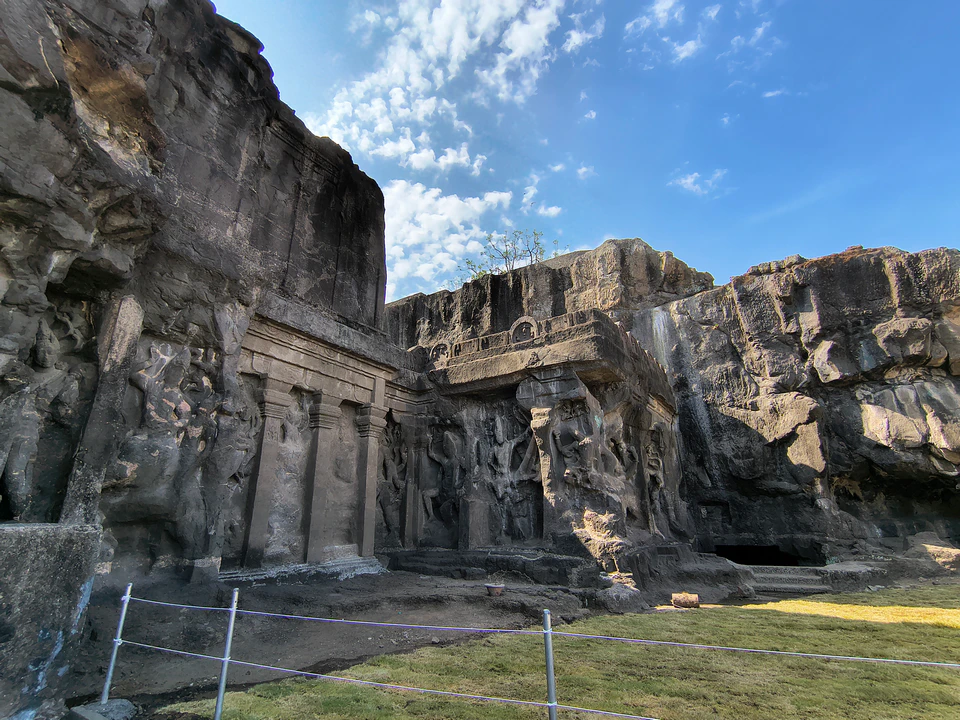
There are very few people around. No Instagram hounds or selfie crowds. As I enter the complex, I am transported to a different world.
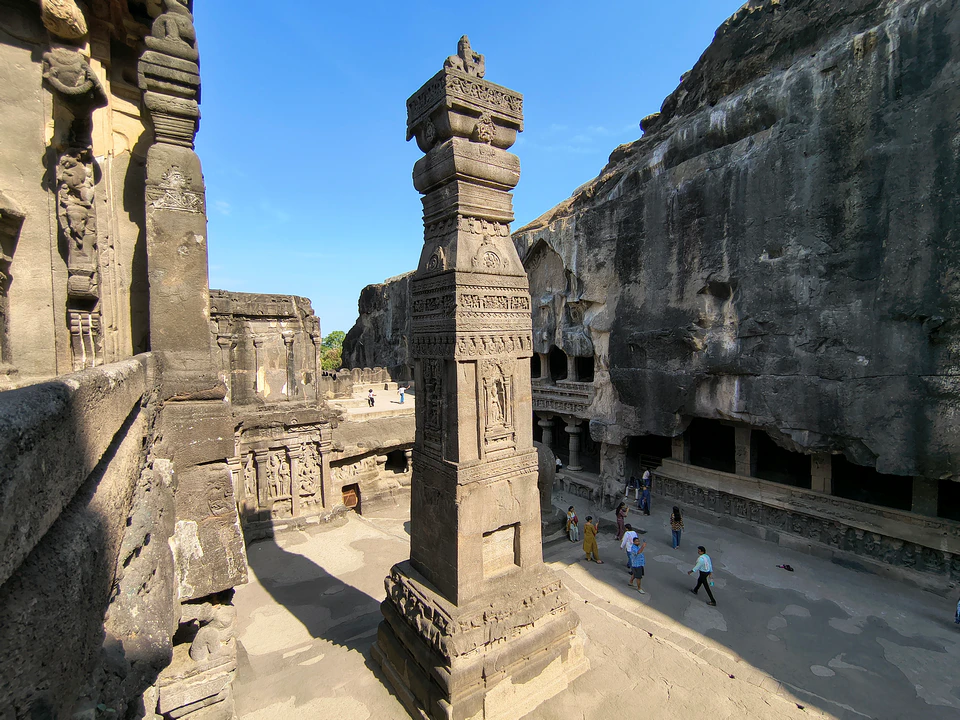
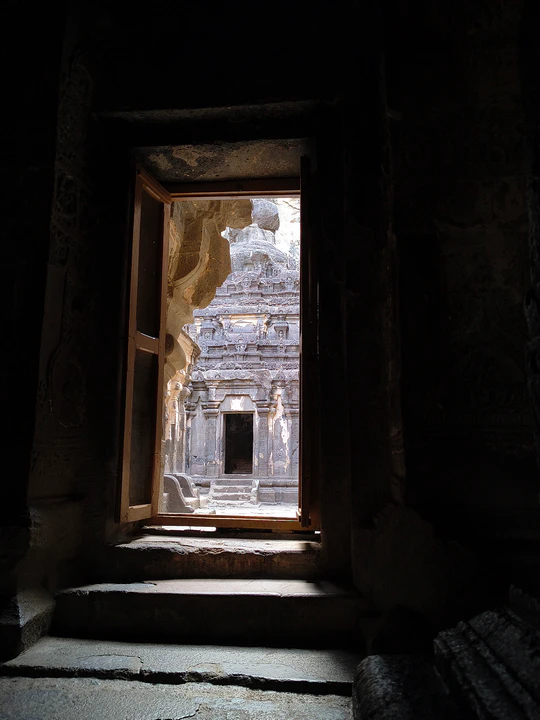
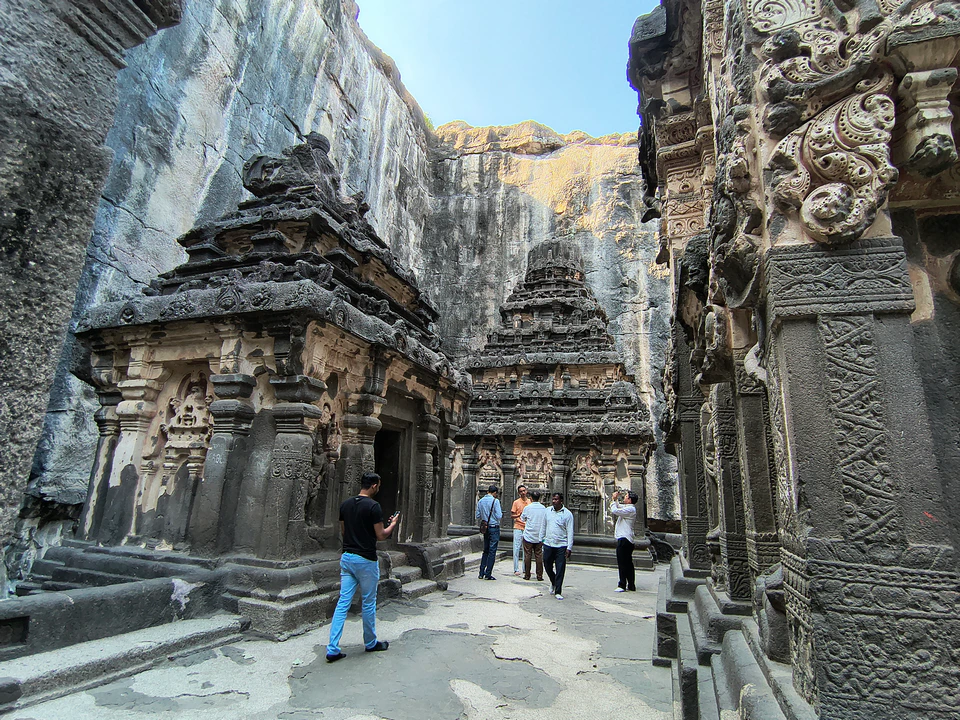
A massive stone pillar stands in splendour. A cluster of temples huddles together beside it. The grey basalt gives them an air of quiet authority. I am standing in the bowels of what was once a huge rock hill.
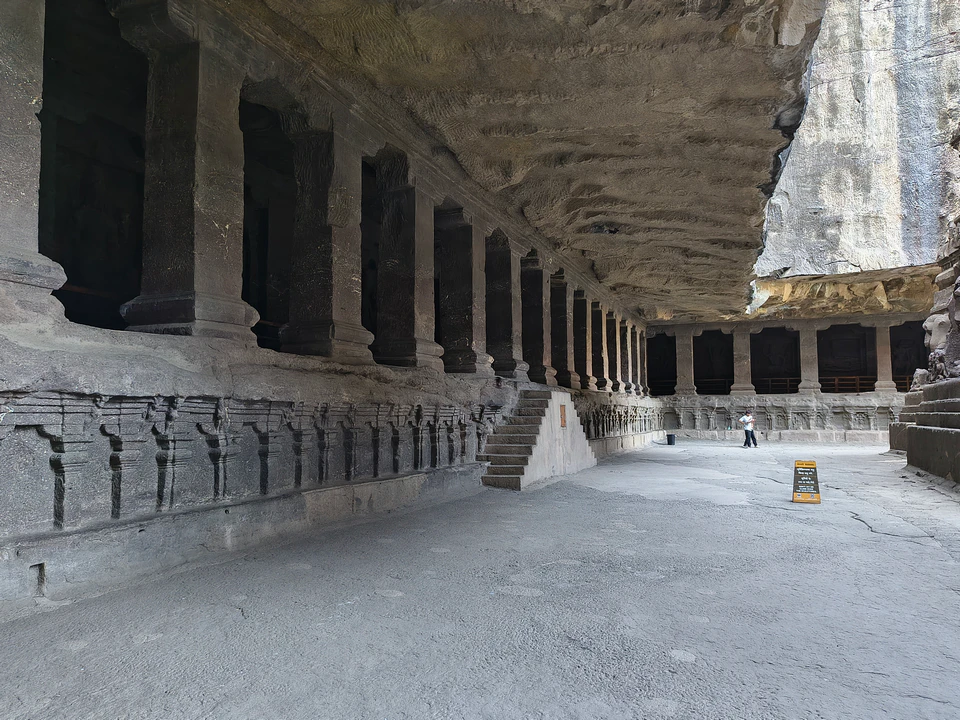
Winding to the left is an overhang created by carving a corridor into the rock. The walls are lined with sculptures while rows of pillars lead the way forward.
I look around as the monument reveals itself. With every layer that peels away, the sense that I am witnessing a masterpiece grows stronger. That all of this was carved in the eighth century remains the greatest surprise.
As the temple began to unfold before me, I realised that its story was not just in the stone but in the centuries behind it — a history as audacious as the monument itself.
History of Kailasa Temple: King Krishna I and the 8th-Century Masterpiece
In the eighth century, Rashtrakuta king Krishna I commissioned this seemingly impossible venture. Between 756 and 773 CE, thousands of craftsmen removed an estimated 200,000 to 400,000 tonnes of basalt to create a symbolic representation of Mount Kailash, Shiva’s celestial home. It was an extraordinary feat of vision, engineering and perseverance.
The Legends That Fill the Gaps
Folklore, as always, fills the spaces history cannot. One story tells of a queen who vowed to fast until she saw the temple completed. In an inspired move, the architects began carving from the top so that the spire would emerge first. Another tradition speaks of the king’s desire to rival the architectural brilliance of the Pallavas and the Chalukyas.
History alone fails to explain Kailasa’s aura. Together with folklore, it keeps the monument suspended somewhere between engineering marvel and mythic wonder. Every stone seems to speak of the passion of those who shaped it.
Mahabharata and Ramayana: The Epic Carvings of Ellora
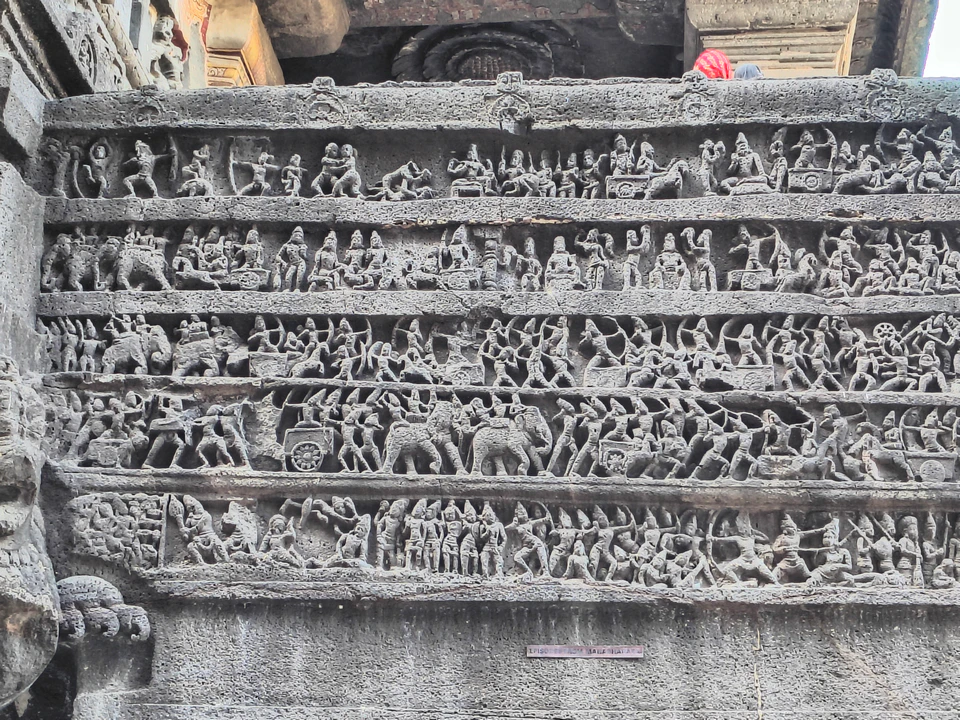
A square stone block projecting from the temple becomes the highlight of my visit. One face of this fifteen-foot block is carved in neat horizontal bands depicting scenes from the Mahabharata. Arjuna sits in penance, his austerities rendered in a single still figure among the surrounding motion. A few rows on, Krishna guides the chariot, reins in hand, while beside him the frenzied battle of Kurukshetra unfolds — spoked wheels, rearing horses, and ranks of soldiers pressing forward row after row. It is a storyboard in stone, a cold boulder brought to life through imagination and craftsmanship, dense enough that a person could stand before it for an hour and still find a new figure in the crowd.
The opposite face narrates the Ramayana. Hanuman carries the Sanjeevani mountain overhead, urgency caught in the set of his shoulders. Elsewhere he sits coiled upon his own tail before Ravana, using it as a throne to needle the demon king. Further along, the Vanara army marches toward Lanka, rank after rank of figures rendered with a clarity that has survived twelve centuries of weather and touch. Even now, the sharpness of the chisel still brings the stories alive.
To me, this is the highlight of Kailasa — two pages in stone encapsulating the greatest epics this civilisation has to offer.
Inside the Sanctum
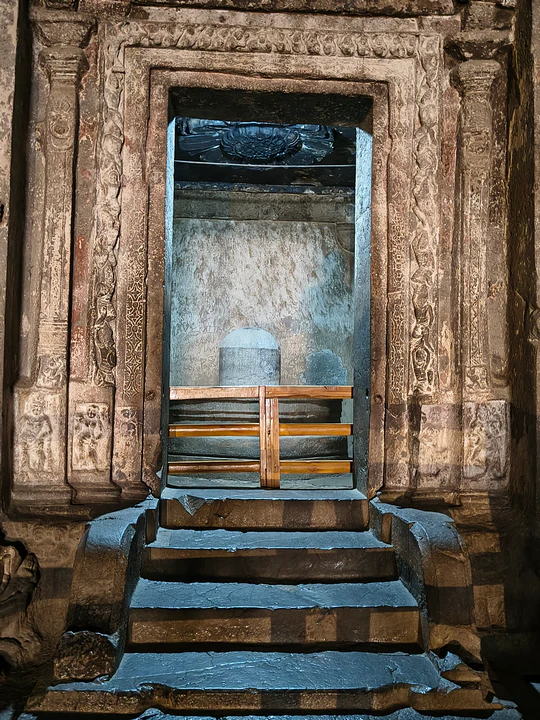
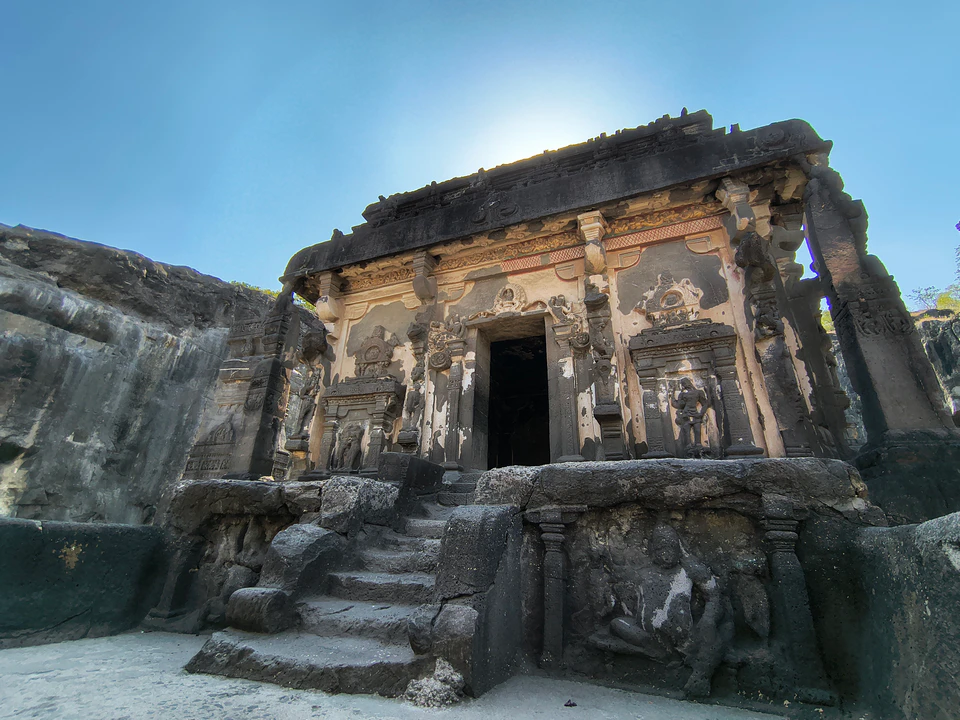
The main sanctum lies a few steps above. As you climb, traces of ancient pigments still cling to a handful of sculptures, though time has worn most of the colour away, leaving just enough to hint at how vibrant this temple once must have been.
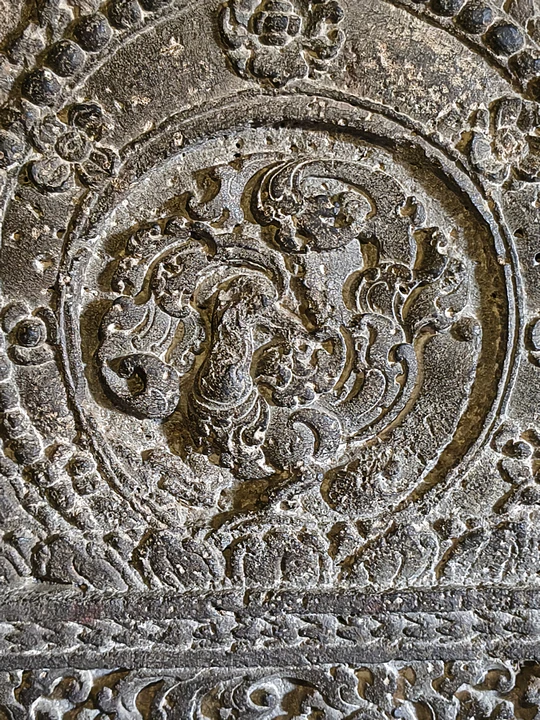
The hall itself is a vast chamber carved entirely from the rock — flat ceilings, majestic pillars, and an imposing Shiva Linga dominating the space. Not a single joint holds any of it together; every pillar, every hall, every sculpture emerged from one solid mountain. One pillar bears a graceful peacock whose elegant lines remain remarkably clear.
Shiva’s Dance Overhead
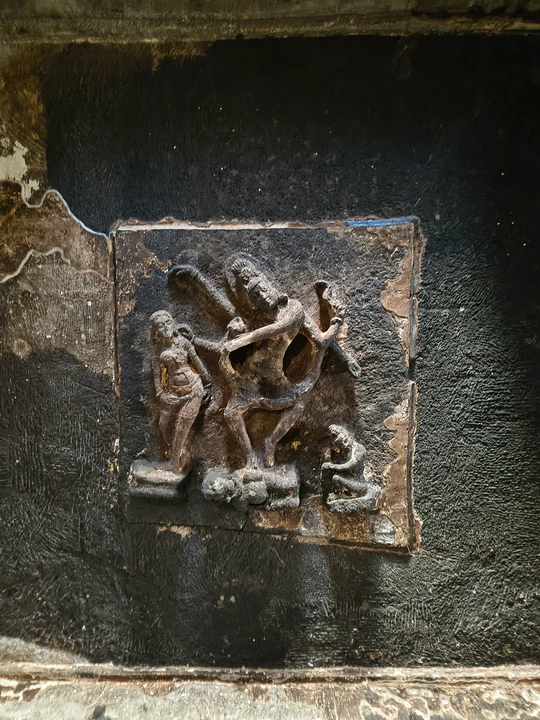
Above, a magnificent relief of Shiva as Nataraja stretches across the ceiling. The Lord’s cosmic dance is complete with the dwarf demon Apasmara beneath his feet, symbolising the triumph of knowledge over ignorance. Looking up at it for even a minute leaves my neck aching. Imagining craftsmen carving it overhead over twelve centuries ago is almost beyond belief.
A Frenzy of Sculpture
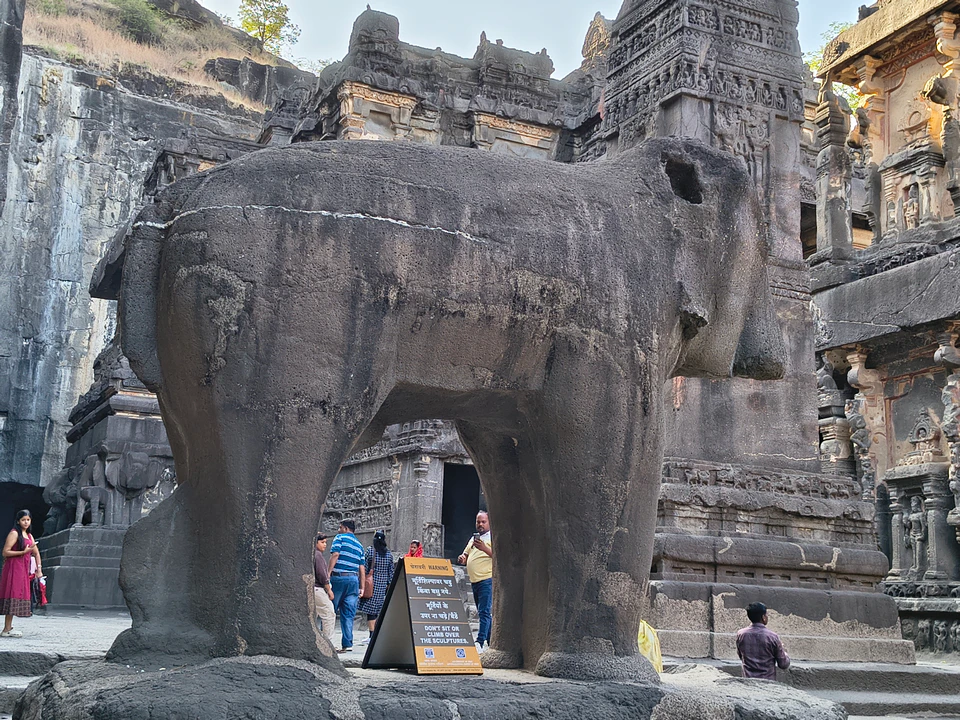
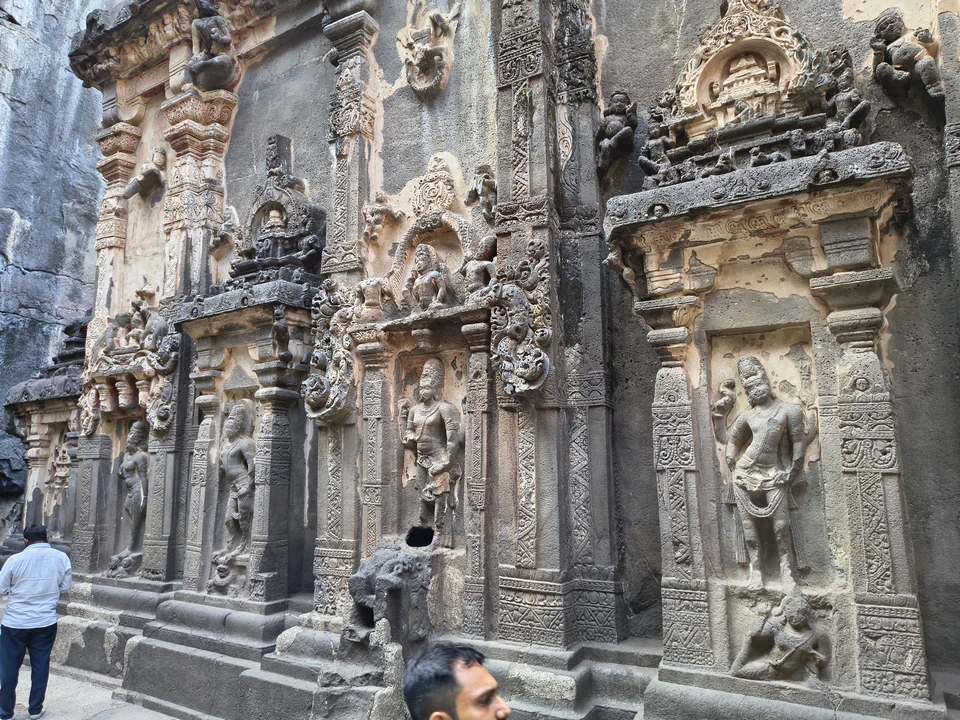
The entire complex is a frenzy of sculpture. Fierce guardians stand watch while lotus medallions and rosettes bloom across the stone. Gandharvas and apsaras appear to float overhead. Mythical lion-like creatures, elephants and countless other figures fill every available surface. Outside the temple, enormous elephants still stand guard — some have lost their trunks to time, others to the carelessness of vandals who understood little of the history before them.
Walking Back Into the Day
As the sun climbs higher, the crowds begin to pour in. The silence of the morning slowly disappears beneath conversations and camera shutters. A few workers brush away cobwebs while guards quietly watch over the growing crowd. I step out of the dream and begin the walk back.
I am still not sure what astonished me more — the audacity of the idea itself, or the devotion and skill required to bring it to life. The Rashtrakuta kings are long gone, and the names of the master craftsmen have faded into history. Yet every chisel mark still carries their conversation with the rock.
Some monuments are visited. Kailasa is experienced.

Kailasa Temple at Ellora Travel Guide
How to Reach and Nearby Places to Explore
The nearest airport to the Kailasa Temple at Ellora is Chhatrapati Sambhajinagar (Aurangabad) Airport (30 km), while the closest major railway station is Aurangabad Railway Station (30 km). The nearest local bus and taxi connectivity is from the central bus stand in Aurangabad, with frequent MSRTC buses running directly toward the Ellora Caves complex (29 km).
The best time to visit is October–March, when the weather is pleasant and cool, avoiding the scorching summer heat and heavy monsoon rains. Within 150 km, you can explore Grishneshwar Jyotirlinga, Daulatabad Fort, Khuldabad, Bibi Ka Maqbara, the Ajanta Caves, and the Lonar Crater Lake.
🏞️ Other nearby Places Worth Visiting
Within easy reach of Ellora, you can explore a rich mix of rock-cut heritage, ancient pilgrimage sites, and medieval history:
- The Ajanta Caves : ( 100 Kms ) : A breathtaking UNESCO World Heritage site featuring 30 rock-cut Buddhist cave monuments carved into a dramatic horseshoe-shaped gorge. Dating from the 2nd century BCE to the 5th century CE, these caves are world-renowned for their exquisite, masterclass mural paintings and deeply expressive rock-cut sculptures depicting the Jataka tales and the life of Lord Buddha.
- Grishneshwar Temple (1 km): One of the 12 sacred Jyotirlinga shrines of Lord Shiva, located right next to the Ellora complex.
- Khuldabad (4 km): A historic walled town known for its revered Sufi shrines and Mughal-era tombs, including the resting place of Emperor Aurangzeb.
- Daulatabad Fort (15 km): A formidable 14th-century hill fortress renowned for its ingenious medieval defense systems and panoramic summit views.
- Bibi Ka Maqbara (28 km): The striking 17th-century mausoleum built by Prince Azam Shah, often referred to as the “Taj of the Deccan.”
- Lonar Crater Lake (140 km): A mesmerizing ecological wonder formed by a meteoritic impact in the Deccan basaltic plain, surrounded by ancient temples.


Wow, well written!
Thanks …nice to know you liked it
I liked the perspective
Thanks Abhijeet…
Very nice
Thanks …good to know you liked it
Brilliant as usual Sir.
Thanks Alan…