
Dev Bhoomi: A Morning in Kumaon
There are temples that announce themselves with towering gateways and restless crowds. Jageshwar does the opposite. Hidden beneath a carpet of ancient deodars, it waits in silence. Timeless and eternally waiting.
We are in Uttarakhand, taking a long-awaited break from routine.
This time, it’s Dev Bhoomi—the Land of Gods—the relatively young state of Uttarakhand. Young in political history, perhaps, but ancient in its traditions, temples, and stories.
We are in the Kumaon region, known for its sleepy hill stations and sweeping views of the Himalayas. Yet what lingers most is the quiet sense of devotion that seems woven into everyday life. Here, faith is not displayed; it is simply lived.
We are headed to Jageshwar Dham, a cluster of temples dating from the 9th and 10th centuries. The sun is bright, and though the heat is dry, it is bearable. Our car winds steadily through the hills, following roads that climb gently before easing into stretches of level ground.
As the ascent begins, the air changes first. It grows cooler, carrying the scent of pine and damp earth through the open windows. Villages become fewer. Shops disappear. The chatter inside the car fades, as though the mountains have quietly asked for silence.
About an hour later, we arrive at Jageshwar Dham. It is busy, but never overwhelming.
Jageshwar Dham: A Thousand Years of Faith
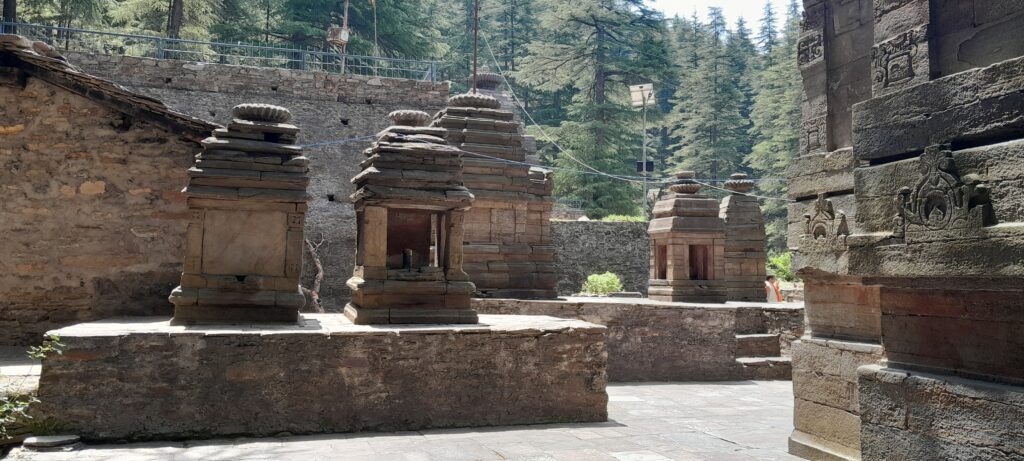
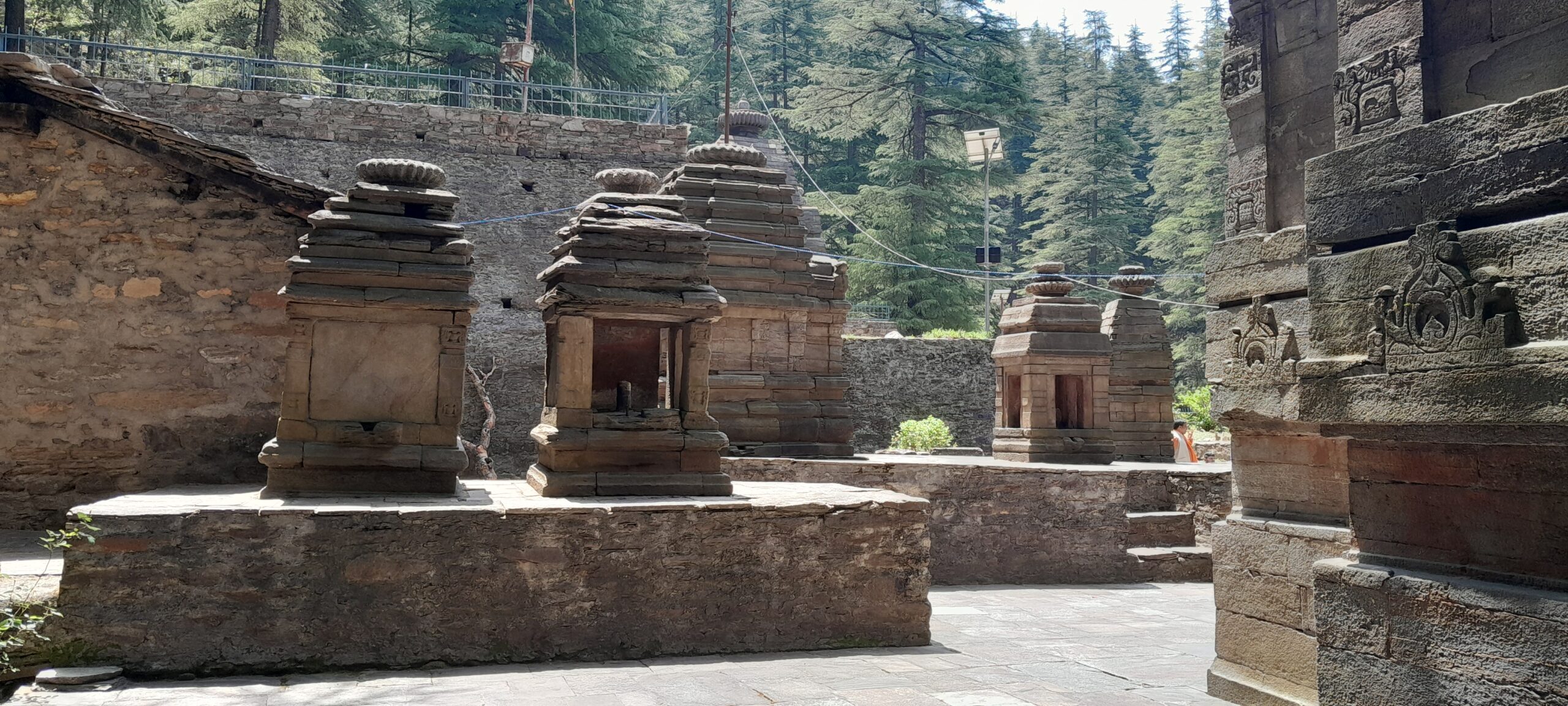
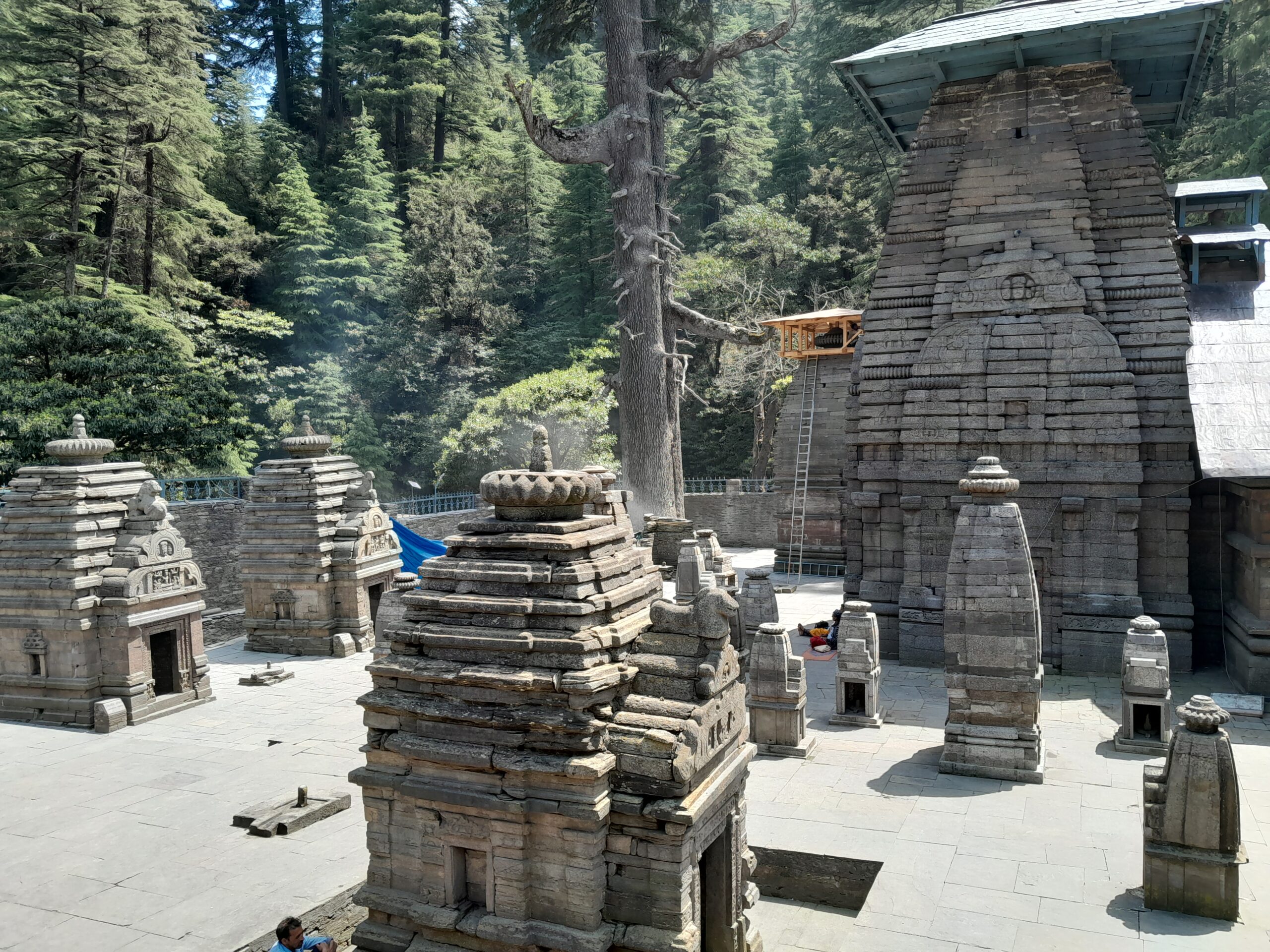
Nearly 124 temple structures—some imposing, others barely shoulder-high—stand clustered together in a setting that feels less like an archaeological monument and more like a living place of worship. Built between the 7th and 12th centuries, their curving shikharas rise in the elegant Nagara style of North Indian temple architecture. The largest among them is the Mrityunjaya Temple, dedicated to Lord Shiva in his aspect as the conqueror of death.
What strikes you first is not the architecture but the atmosphere. There is no spectacle here, no theatre of religion. Priests move quietly between shrines, performing rituals with the ease of people continuing a tradition that has endured for centuries. Towering deodar cedars surround the complex, their deep green canopy adding to the sense of calm. The warm smell of the heated stone floor mixes with the wet draft of the wind descending from the deodars on the hillock behind the temple.
Many devotees regard Jageshwar as one of Shiva’s holiest abodes, and the temple complex has remained an active centre of worship for well over a thousand years.
A few priests conduct pujas at the main shrine while others tend to the smaller temples. No one rushes you. No one insists you buy an offering. They simply remain available if you seek their help. For a while, it is just you and your gods.
Monkeys roam the temple grounds with easy confidence. One sits on a stone wall while an elderly saffron-clad priest chats with it as though continuing yesterday’s conversation. The monkey accepts a banana with complete indifference, pauses for a moment, then springs away into the trees. Neither seems surprised by the encounter. Perhaps they will resume the conversation tomorrow.
There are temples of every kind across Kumaon, including deeply revered shrines such as Chitai Golu Devta. Everywhere, life seems to move to a gentler rhythm. The mountains stand quietly over a landscape that has never felt the need to hurry.
On our way back, we stop at another group of ancient temples. This one is almost deserted. A lone priest sits motionless on a stone outside the shrine, his morning rituals complete. A narrow stream slips past the temple walls, barely disturbing the silence.
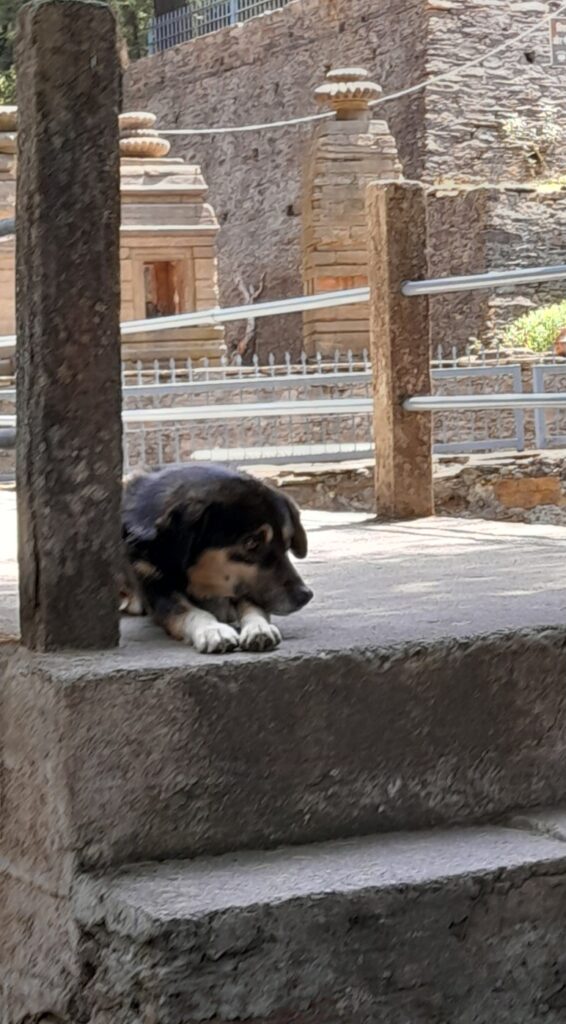
A mountain dog curls itself beside the worn stone steps. My son watches it for several minutes before smiling and says,
“I think even this dog has attained Nirvana.”
The dog opens one eye, yawns with magnificent laziness, and settles back into sleep. Around us, no one seems to mind the passing of time.
That, perhaps, is Kumaon at its finest.
Sab Bhole ki Kripa Hai
On the return journey, we stop at a small roadside restaurant overlooking a broad valley.
The owner, an elderly Kumaoni gentleman with a tiny red tilak, silver hair, and kind eyes, serves us a traditional meal. There is Bhat ki Dal, delicately spiced and brightened with a squeeze of lemon, accompanied by simple cauliflower cooked with onions and tomatoes. It is honest food, prepared without fuss, and somehow tastes exactly right.
As we prepare to leave, I thank him for the meal.
He smiles gently.
“Sab Bhole ki Kripa hai, saab.”
It is all Lord Shiva’s blessing.
There is no trace of pride in his voice. Only gratitude.
Perhaps that is what Dev Bhoomi truly means.
Why Kumaon Stays With You
Some journeys fade into photographs.
Others return unexpectedly, months later, in the middle of an ordinary day.
Kumaon belongs to the second kind.
Long after the temples, forests, and winding roads disappear from memory, small moments remain: a monkey waiting patiently for a banana, a priest sitting without hurry beside an ancient shrine, a sleepy mountain dog, and an old restaurateur who attributes everything he has to Lord Shiva’s grace.
When everyday life begins to gather speed again, those memories have a quiet way of slowing it down.
Somewhere in the Himalayas, the cedar forests still whisper above thousand-year-old temples, morning bells still echo through the valley, and the mountains continue exactly as they always have—unhurried, watchful, and patient.