
Chasing the Monsoon Through Shimoga
The monsoon had arrived. It was still not the angry storm it can be, but an early, apologetic drizzle of early June. The hillside and the roads waited to be drenched.
It was that time of year again. The annual drive through the ghats. Part ritual, part escape.
The best way to do this was to choose one of the many routes that line up from the south to the north of the Western Ghats. The normal routine is to drive up and through these picturesque passes from the elevated, hilly east and descend into a plateau. The flatter land will then give way slowly as it reaches the coastline in the west of India.
Into Shimoga: Beautiful and a Grim Reminder
We are in the Shimoga region of Karnataka. It has been a few days on the road, and it was time to go up the Hullickal Ghat and descend into Udupi, home to the Sri Krishna temple.
The morning is a beautiful bluish-grey as the rain clouds hover above. It is raining in spells, but it is more of a drizzle. One look at the sky, and it is easy to judge that the mighty Sun didn’t stand a chance today; in fact, it hasn’t even had a fleeting peek for the past few days.
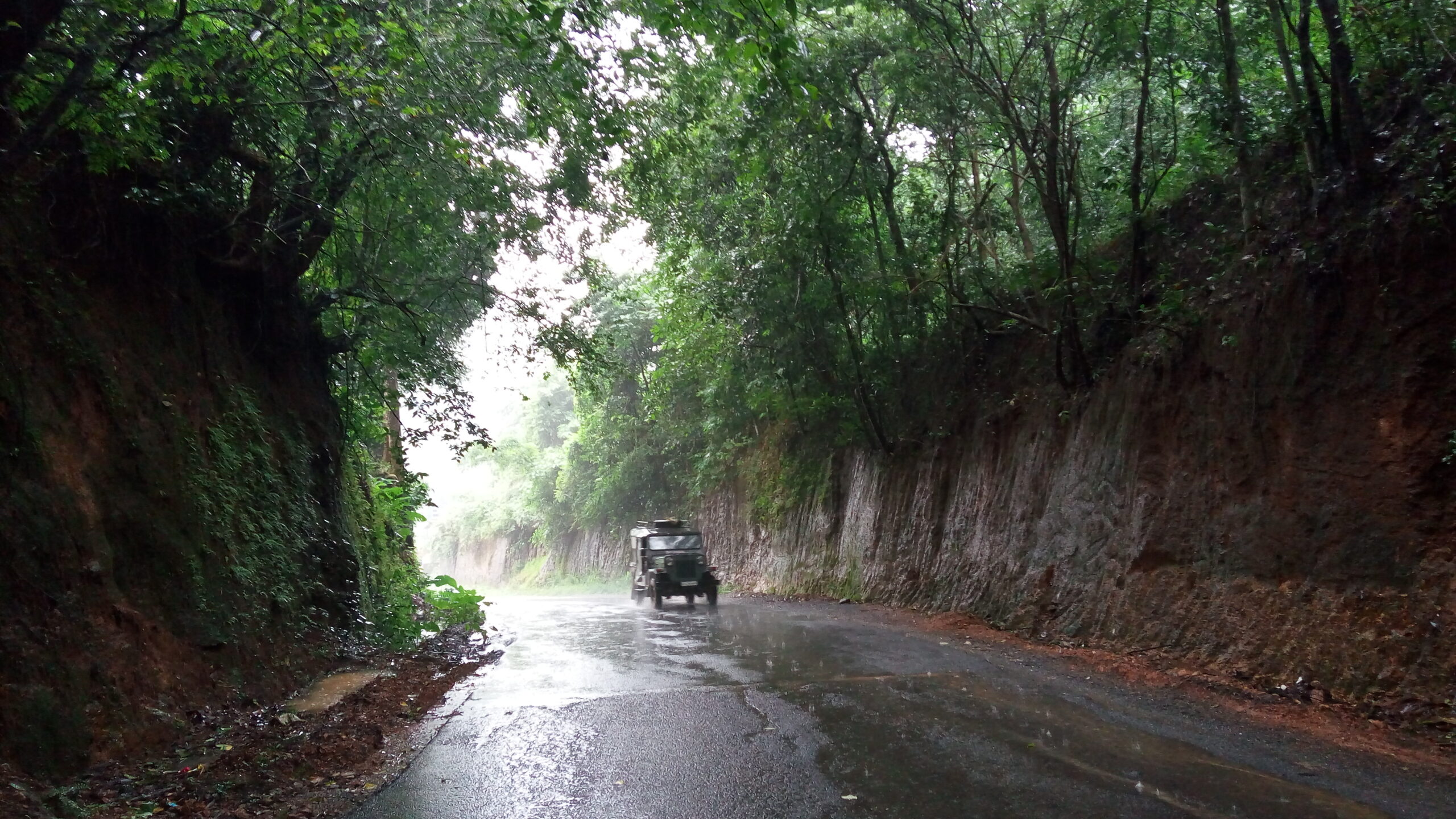
The wipers on the car don’t rest as the drizzle continues and we head westward. The roads gleam as they cut their way through heavy, green forest cover. The rains have enlivened the mountains; they have sprung to life. Majestic trees stand drenched and dripping; their bark glistens as it washes away the grime. The smaller plants and the forest grass have all gained confidence as they stand tall and sway in the wind.
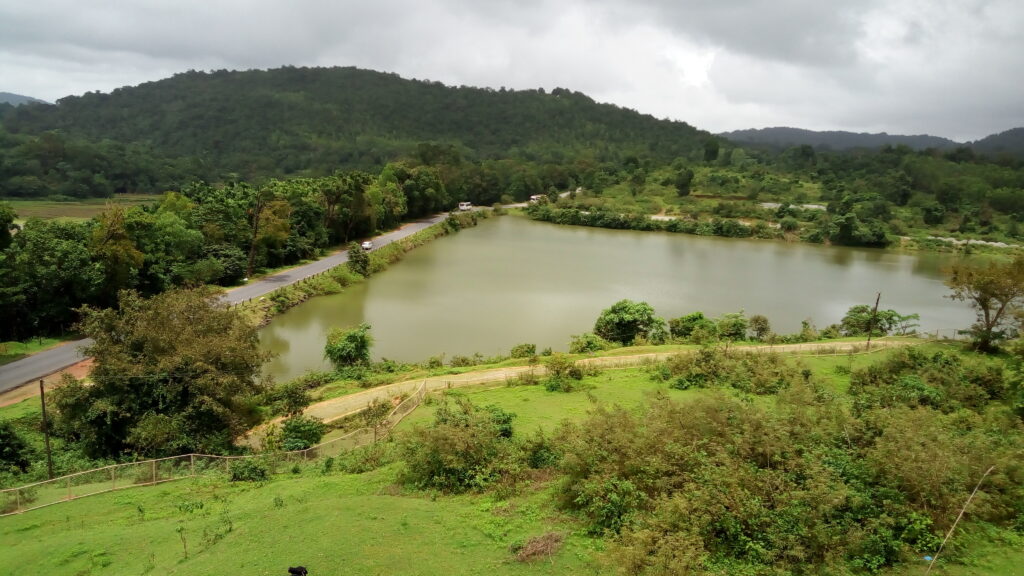
We drive past a vast lake, shining and brimming. A board on the road points to Nagara Fort. It’s a fork to the left, which we take without a thought. The lesser road climbs for a few minutes, and suddenly you find yourself in front of the fort. It is deserted, and a massive gate adorned with architectural carvings beckons you.
The Gates of Nagara Fort Beckon.
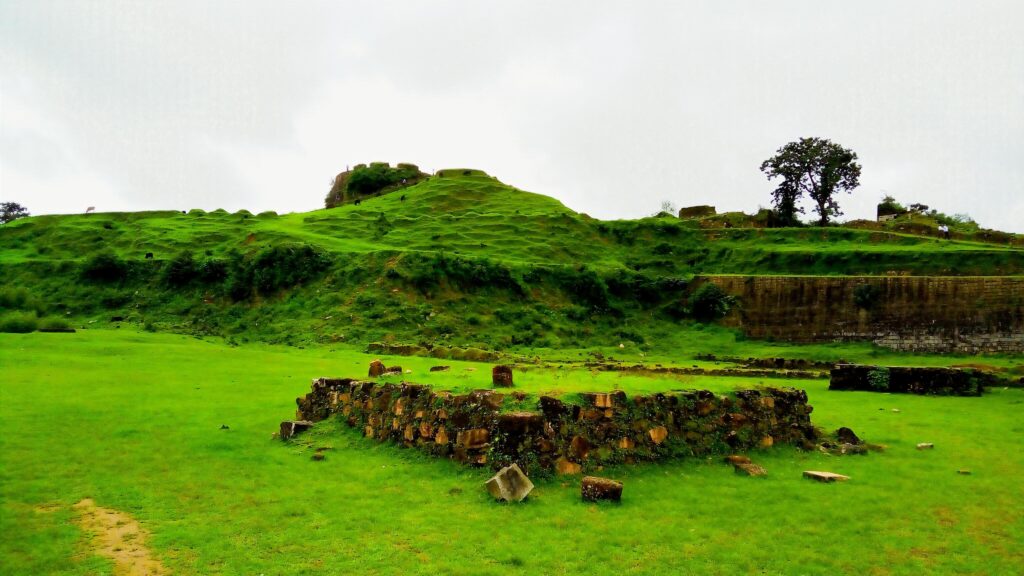
When you go through the gates, you realize the magic of it all. It is a fort that has seen better times; however, what catches the eye is that it is carpeted in green. The rains have worked their stuff, and the whole ground is covered in a carpet of green grass. Many of the internal structures are in ruins. The walls are surprisingly sturdy; they were built with huge, square-cut stones and are still perfectly in place—wet and moss-covered, but solid.
Almost all of the outer periphery of the fort is intact. As you approach it and stand on the top of the fort parapet, a magical sight unfolds itself.
Nature has put on its finest livery; miles and miles of forests stretch out to the horizon. The lake we passed looks spectacular from the height of the fort. There are a few more of them in the distance. The road we took is sparkling too, though one could do without the modern eyesore in the middle of a breathtaking view.
The Secrets of Bidanur: From Royal Asylum to the British Rise
Though the roots of this hillock trace back to older vantage points, the true story of Nagara Fort begins in 1640. Originally called Bidanur, it became the final, hidden capital of the Keladi Nayaka dynasty after their previous seat of power was plundered. The great king Shivappa Nayaka decided to create the fort deep in the Malnad jungles.
Perhaps the more interesting part of its history is in 1689. Chhatrapati Shivaji’s son, Rajaram I, was fleeing south with , pursued by Aurangzeb’s army. The then ruler of Bidanur, Rani Keladi Chennamma, granted the Maratha prince royal asylum. In response Aurangzeb dispatched a massive army.
The Mughal army struggled in the Malnad terrain. Dense forests and heavy monsoon rains were challenge and the Mughals struggled. Chennamma’s soldiers launched guerilla raids in the night and ultimately the Mughals retreated.
Some part of the ingenuity of the Rani is still visible. In the fort’s into the green carpet one can spot the Akka Thangi Honda. ( meaning the Twin Ponds of the Elder and Younger Sister). A wonderfully engineered freshwater system that kept the garrison self-sufficient through long months of the siege.
Later Hyder Ali captured the fort in 1763 . Then followed the Anglo-Mysore wars and finally it was permanently marginalized under the British rule. Left behind by politics and time, it was slowly abandoned to the forest, transforming into the ruins it is today.
Nature Reclaims the Fort
We are still on the parapet, seated on the stones, looking out into the distance and soaking in the scene. Silence is supreme; the wind is the only one making noise, flapping our clothes and whistling around the ancient walls. The rain picks up speed, and the drops gain weight, slanting across and enjoying a tango with the wind.
As we drop down from the walls and walk away, I look back one last time. The fort darkens in the gathering rain, its stones wet and ancient, its silence unbroken. The forests stretch beyond it in every direction—indifferent, patient, permanent. Nature is ready to unleash itself on this human endeavor and chip away as it always does.
There is a lone guard in a blue uniform seeking refuge under the arched gate. It is a far cry from the days when this was an impenetrable fort holding even the Mughals back.
The Nagara Fort to me is yet another of those countless reminders of unrelenting nature and unstoppable time, taking away everything that mortal man creates.