This one should have been the first story. It took some time to get around to writing about this, but here I am, finally taking you to the temple in my own village.
The Thiruvalore Mahadeva Temple stands in all its majesty in the small village of Thiruvalore, about 17 kilometres from Kochi. I have been to many temples in Kerala, but I have rarely seen one with such beauty. There is a surprising crispness in the air inside the temple complex. It is difficult to explain and needs to be experienced.
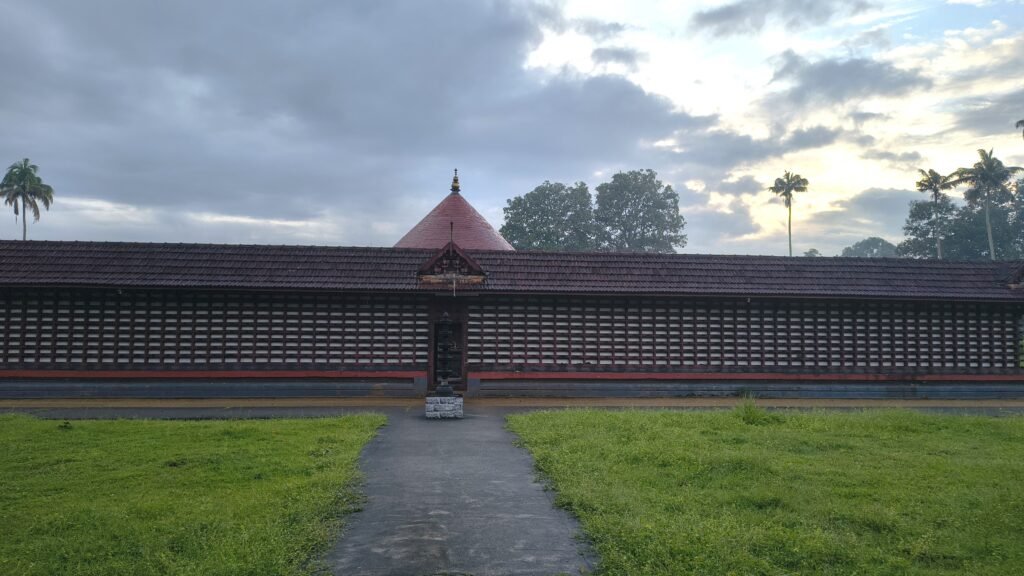
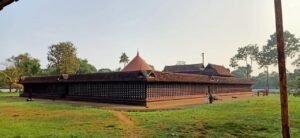
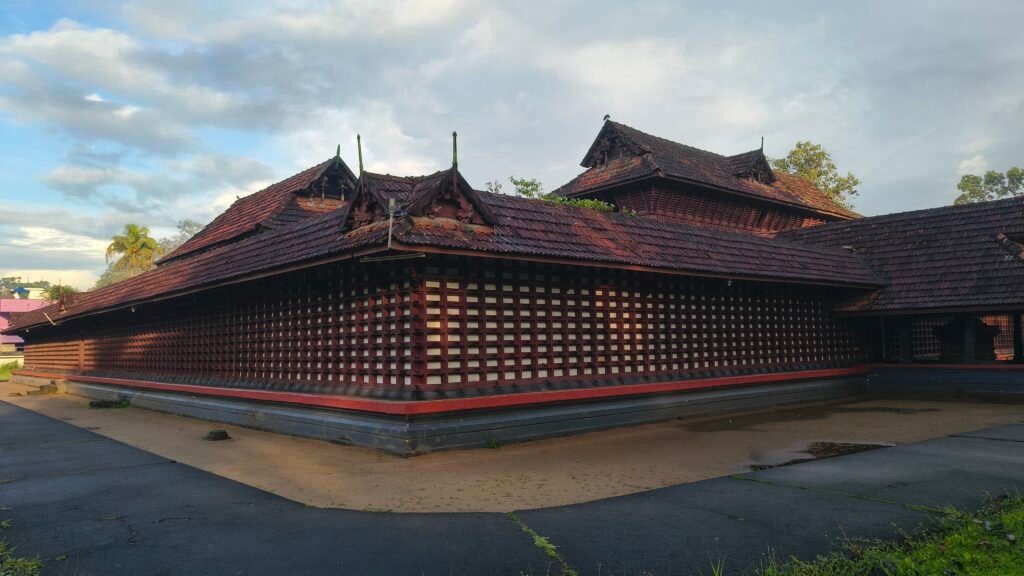
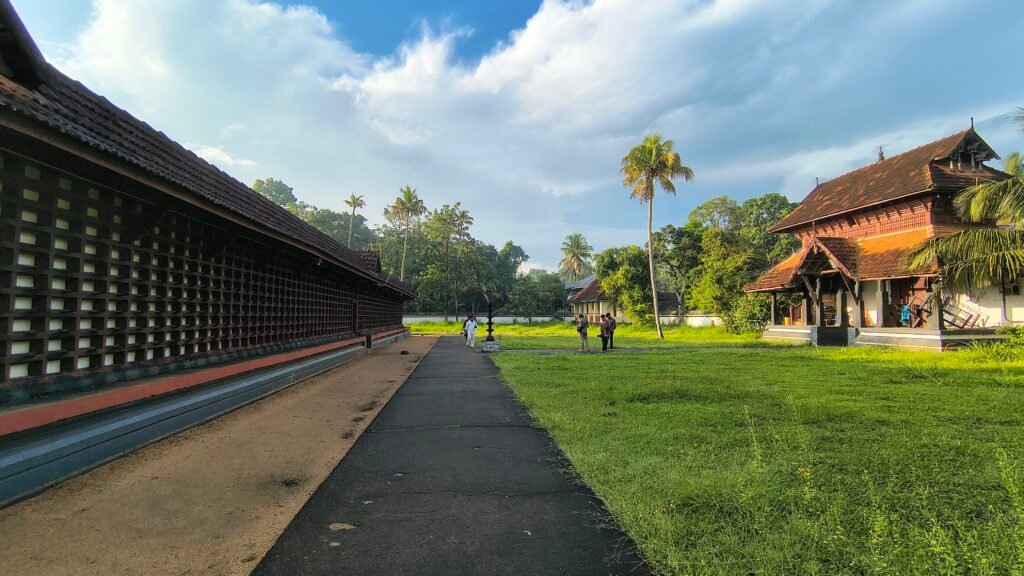
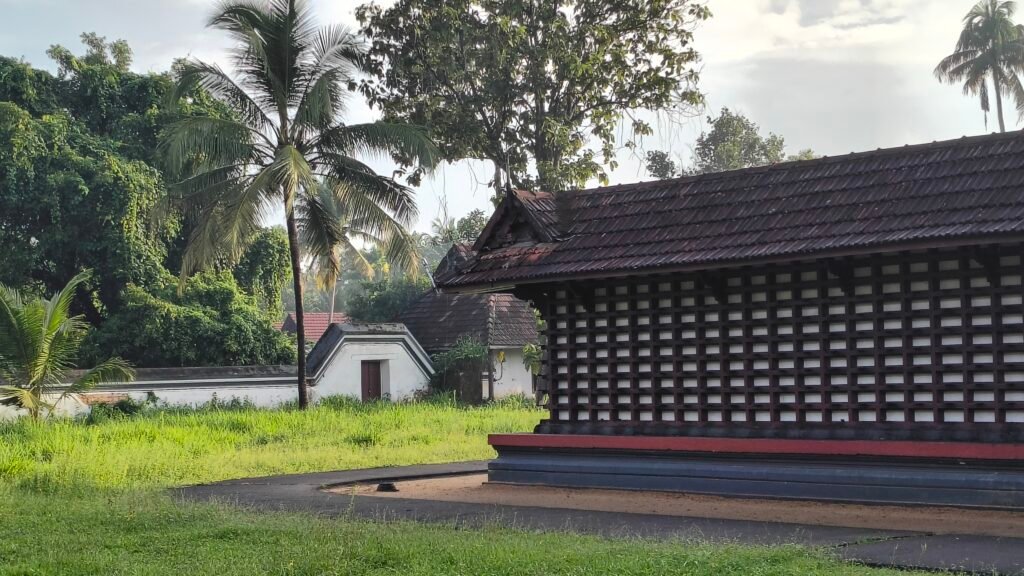
The first thing that catches your eye as you enter through the large gateway is the open space surrounding the temple. The outer structure, or Chuttambalam, is rectangular, with a tiled, sloping roof. A stone pathway runs all around it, bordered by wild grass with a sparkling light-green hue.
Built into the exterior wooden framework of the walls is a sprawling, multi-tiered arrangement holding thousands of traditional oil lamps. When these lamps are lit on special occasions, the sight is heavenly.
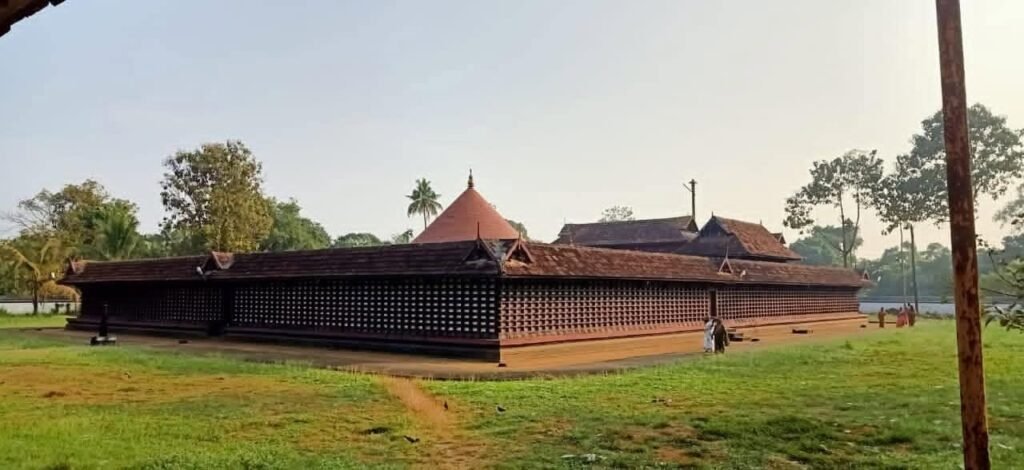
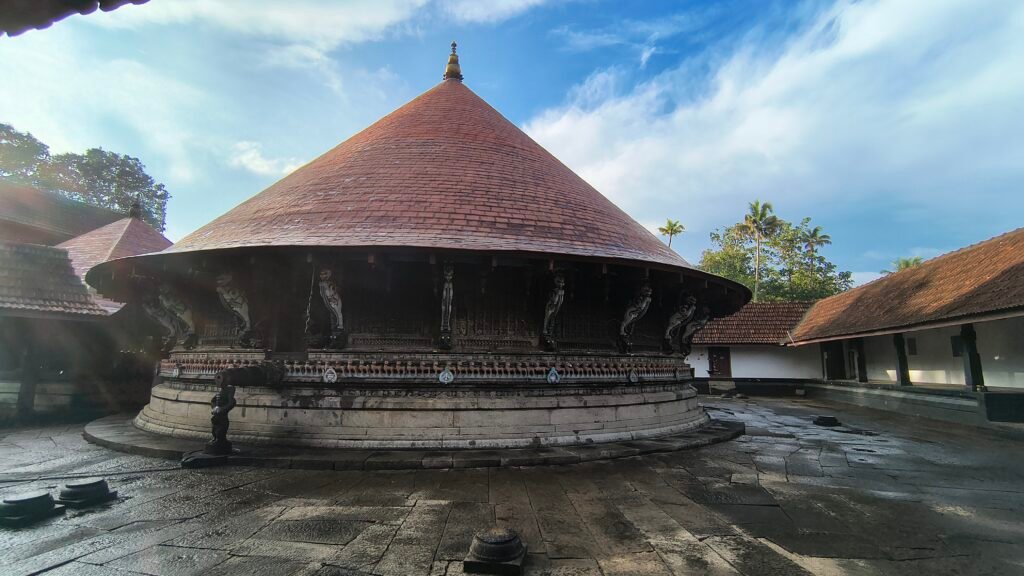
As you step further inside, the imposing temple structure catches your attention. Built in the traditional Kerala architectural style, the large circular sanctum sanctorum, known as the Vatta Sreekovil, stands in all its glory. Its golden-brown roof brightens the entire scene, while the granite base and walls are adorned with intricate carvings.
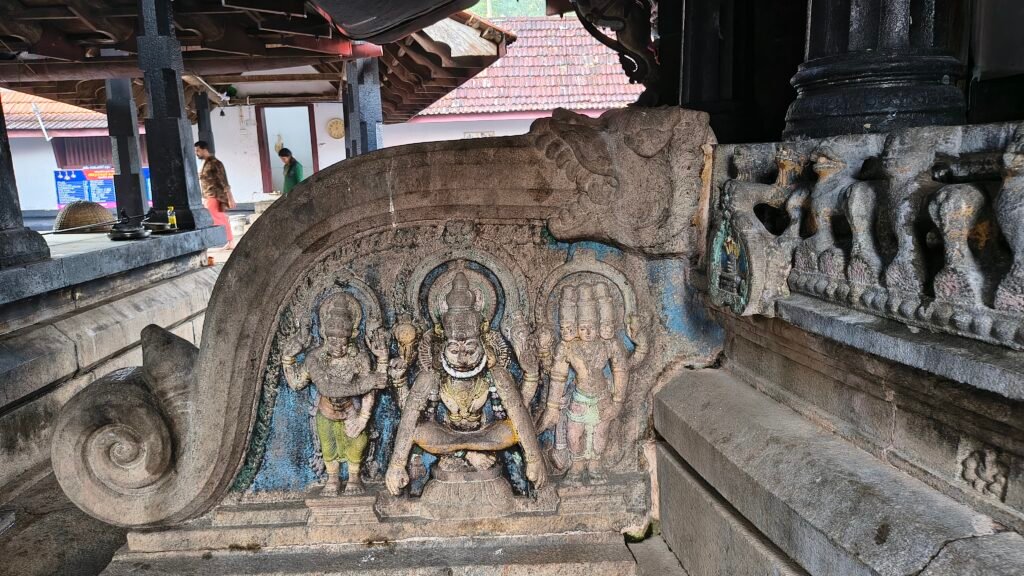
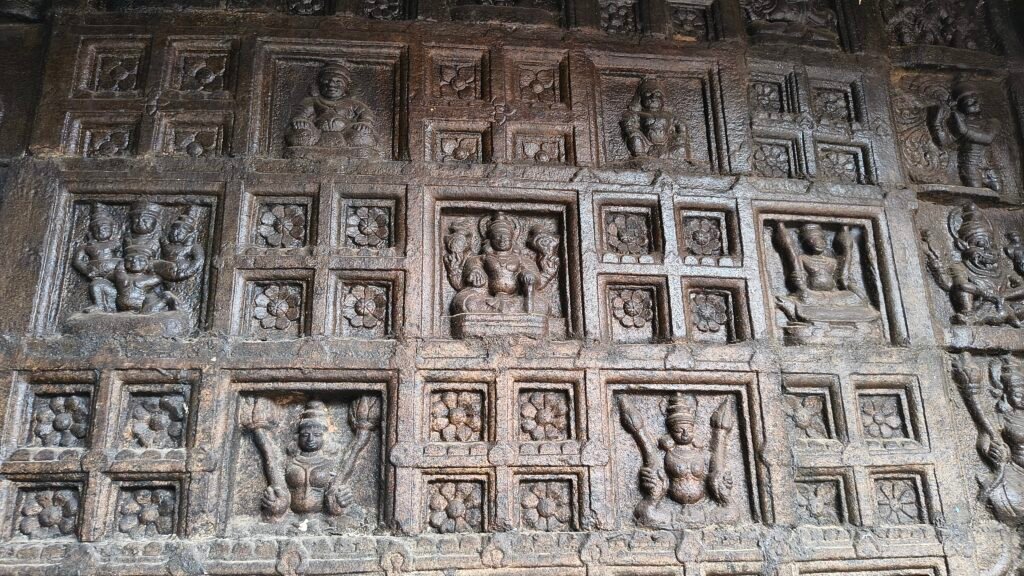
The circular, east-facing sanctum features relief figures of Lord Brahma, Lord Vishnu and Lord Maheshwara along the sides of the steps leading to the sanctum. The ceilings within the complex also feature beautiful wooden carvings.
But the real beauty of the temple lies in its ambience.
The crisp morning air, the smell of dew on the grass and the reassuringly cool stone pathway are just what one wishes for. On most of my innumerable visits, there has hardly been anyone around. Unlike many other temples, Thiruvalore rarely sees a rush of visitors. Everything seems to be in sync with the calmness of the complex.
While the architecture is stunning, it is the deity and the myths surrounding the temple that deserve attention. There are many variations of these stories, and that adds to the air of mystery surrounding the temple’s history.
Shiva in His Fiery Form
Thiruvalore is one of the few temples in Kerala where Lord Shiva is worshipped in Roudra Bhavam, his fiery, cosmic and destructive form. The Lord is depicted with his all-powerful third eye wide open, embodying an intense surge of energy.
Local belief holds that this immense cosmic heat is balanced by a tranquil pool situated directly opposite the temple. There is also a strict tradition that no abhishekam or dhara is performed on the main idol here. Instead, the customary dhara ritual for Thiruvalore is performed at the nearby Iravipuram Shiva Temple.
The temple has other interesting mythological associations. Local folklore connects this sacred ground with the Ramayana. It is believed that during the aerial battle between Jatayu and Ravana, Jatayu’s tail fell here as he tried in vain to stop Ravana from abducting Goddess Sita.
The Legend of Surya Kalady
For a temple that is so peaceful and inviting, Thiruvalore has a surprisingly dark collection of legends. Some of the stories I have heard over the years are difficult to forget.
One of the most intriguing is the legend of Surya Kalady Bhattathiri.
Surya Kalady Bhattathiri, also known as Kaladi Patteri, belonged to a family that practised occult rituals to ward off evil forces. An early ancestor of the Kalady Mana had lost his father to a malevolent, blood-sucking Yakshi (a demoness).
Seeking revenge, the son conducted an elaborate fire sacrifice, or Homam. He summoned the Yakshi and eventually sacrificed her in the burning homa kunda (the fire altar). He is also said to have exacted revenge on a Gandharva, the Yakshi’s partner. In his quest for revenge, he reportedly employed many rituals, such as the sacrifice of ants, which were considered unfair and generally avoided. The Yakshi was not happy that the Bhattathiri used an unfair trick.
Before her death, the Yakshi cursed him with a painful end (a severe urinary ailment and breathlessness that left him gasping for breath). The only way to escape the curse, it was said, was to seek the Lord’s darshan at Thiruvalore.
Knowing that he could not reach Tamil Nadu in time, he set out on foot for the temple here in Kerala. He arrived on the day of Vrischikam Karutha Ashtami, also known as Vaikkathashtami, when a special Ashtami offering is made at the temple.
The curse was severe. A day before the appointed visit, a divine voice reportedly rang out from the sanctum, instructing the priest to close the temple after the 10 am puja the following day and keep it shut for the rest of the day. There would be a death in the temple, the voice warned.
When the Bhattathiri reached Thiruvalore, he found the temple closed. He could not even make it past the outer gate.
Desperate and gasping for breath, he bit into the wooden doorframe and eventually collapsed. The supernatural energy that took hold of him was said to be so powerful that his feet struck the granite floor with tremendous force, leaving a deep hollow mark.
The granite stone slab on the entrance gate still shows the indentation of the feet. According to local family accounts, the wooden doorframe had marks of his teeth.
Lying in agony on the northern verandah of the western gopuram, the Bhattathiri cried out in despair, asking the Lord if this was how an afflicted seeker who had come for refuge was treated, and finally cursed that the temple would be struck by lightning.
A divine voice is said to have asked if there was no redemption for this curse. The Bhattathiri declared that salvation would come only when the champaka tree in the northwest corner, within the northern wall of the temple, dried up completely.
It is said that sometime in the mid-19th century, lightning struck and damaged the sanctum and even chipped the Shiva Linga.
The Bhattathiri’s foot marks on granite remain a reminder of a story that has lingered within these otherwise silent temple walls.
Proving Shiva’s Roudra Bhavam
Another extraordinary story concerns the temple’s original Thantri (the spiritual head of the temple) and the twenty-eight Namboodiri families who were its traditional trustees, known as the Ooralars.
When the temple was first constructed, the Thantri responsible for its consecration was challenged by the trustees. They wanted him to demonstrate that Lord Shiva truly possessed the Roudra Bhavam attributed to the deity.
The Thantri initially refused, believing that such a demonstration was neither necessary nor appropriate. But when the trustees persisted, he decided to prove his point.
He coated the flat, square stone in front of the sanctum (the bali-kallu) with cow dung and entered the sanctum. He asked the trustees to open the doors the moment smoke appeared, then closed the doors.
Within a short time, the cow dung dried up and began to smoulder, and the stone started to emit dense smoke.
Worried for the Thantri, only two of the trustees rushed to the sanctum and opened its doors. They managed to rescue him, carrying him out unconscious, and revived him.
On regaining consciousness, the Thantri pronounced a grave curse: the families of all those who failed to come and open the door would not have a continued lineage. Except for the two who had rescued him, the remaining twenty-six families were eventually wiped out.
The Thantri subsequently relinquished his traditional responsibilities, refusing to work with a group that had shown so little trust in him. He struck the temple bell, prayed, stepped out and departed.
Later, at the earnest request of the remaining trustees, the Thantri’s responsibilities were taken over by the Vezhaparambu family, which continues to hold them to this day.
Whether one sees these accounts as folklore, religious tradition or something beyond explanation, they are an important part of the stories associated with Thiruvalore.
Thiruvalore Mahadeva Temple : A Temple That Comes Alive
For most of the year, Thiruvalore remains a quiet place. Its peaceful surroundings and relatively few visitors make it quite different from some of Kerala’s better-known temples.
The exception is the annual Utsavam, celebrated in April. The temple then comes alive with thousands of lamps arranged around its wooden structure. As darkness descends, the flickering flames sway gently in the breeze, illuminating the complex and creating a glorious spectacle.
The festival concludes a day before Vishu, with the sacred Arattu ceremony conducted near Aluva, along the banks of the Periyar River.
The crowds gradually disappear, the lamps are extinguished, and the temple returns to its familiar tranquillity.
Silent mornings, cool breezes and swaying blades of wild grass once again take over.
Thiruvalore Mahadeva Temple is one of those places where the physical beauty of a structure is only part of its attraction. Its legends are grim, mysterious and extraordinary. They speak of faith, divine power, curses and the supernatural, all woven into the life of a small Kerala village.
Perhaps that is what makes this temple so special to me.
It is in my village and I have visited it countless times, yet there is always something about its silence and its stories that draws me back.
Some places need to be seen. Others need to be experienced. Thiruvalore is both.
PS : Those who know me know that the initial T in my name also comes from this village’s name.!!