From Childhood Joy to the Grand Tours
A bicycle is often a child’s first meaningful gift, marking their initial encounter with the world of moving machines. It typically begins with a tricycle, and as balance is mastered, one wheel is shed. The simple joy of feeling the wind in your hair while coasting down a neighborhood street becomes an indelible memory.
At first glance, cycling may appear to be a quiet, leisurely pastime. Yet the human impulse to transform simple pleasures into fierce competition caught up quickly. The innocence of casual pedaling gave way to organized racing, testing the limits of speed, stamina, and grit. Over the past century, this pursuit has turned cycling into one of the world’s most dynamic athletic disciplines.
Among the vast calendar of professional road racing, three events reign supreme as the Grand Tours, the undisputed crown jewels: the Tour de France, the Giro d’Italia, and the Vuelta a España.
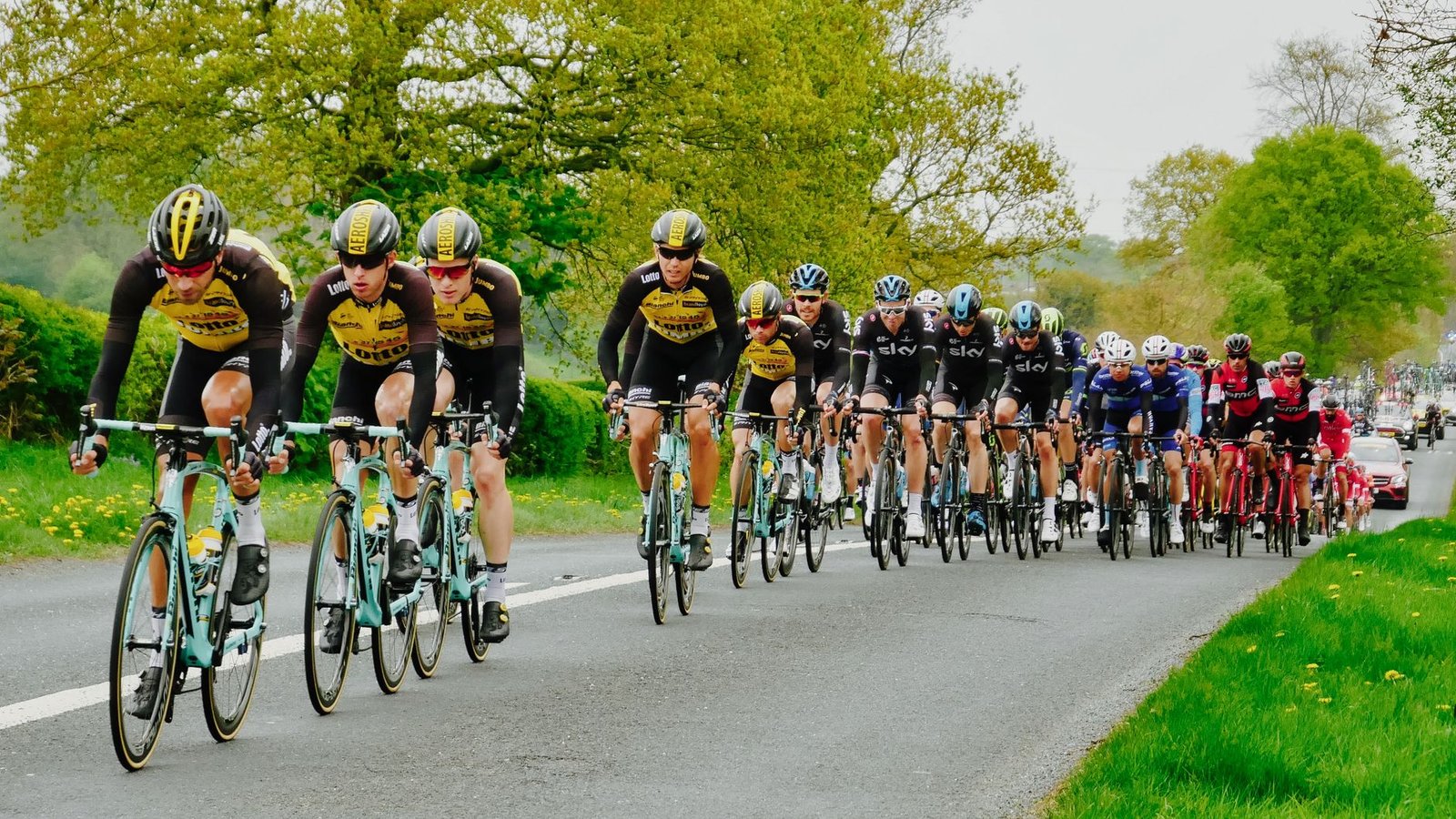
In this three part series, we explore this holy trinity of cycling, beginning where legend, national pride, and sheer physical torment converge: the Tour de France.
The Tour de France: Pinnacle of Competitive Cycling
Founded in 1903 to boost circulation for the sports newspaper L’Auto, the Tour de France has grown into the most prestigious bicycle race on earth. Today, it stands as an ultimate test of athletic endurance: a grueling three week odyssey covering roughly 3,500 kilometers of unforgiving French terrain.
The race unfolds across distinct stages designed to push riders to their absolute physical and psychological limits. From punishing mountain climbs to white knuckle descents, the Tour demands tactical cunning, team cohesion, and iron willpower.
While the route shifts each summer, frequently staging its opening miles beyond French borders to celebrate international host cities, the grand finale since 1975 has remained constant: an iconic, high speed sprint down Paris’s Champs-Élysées.
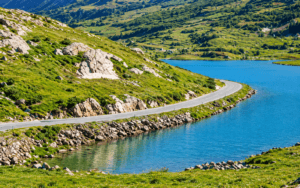
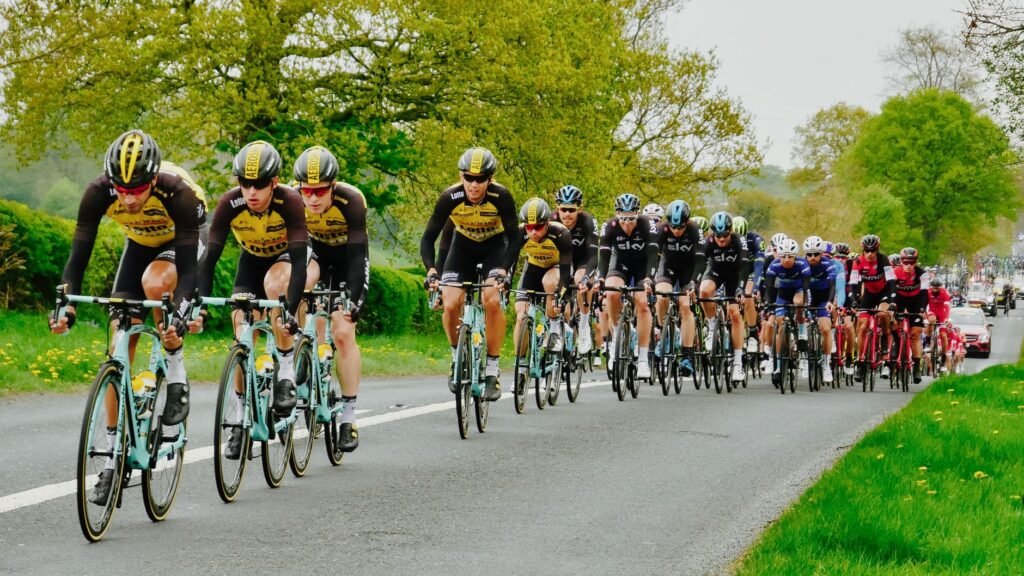
Along the way, the peloton sweeps through sunlit vineyards, ancient stone villages, and the treacherous, razor thin passes of the Alps and Pyrenees. The sheer beauty of the French countryside provides a striking contrast to the suffering on the road. There is simply nothing else like Le Tour.
Tour Legends: The Giants Who Defined the Race
Over more than a century, the Tour has served as the proving ground for cycling’s greatest figures.
Four icons share the record for the most overall victories, with five titles apiece: Jacques Anquetil, Eddy Merckx, Bernard Hinault, and Miguel Indurain. Among them, Indurain stands alone in the official record books for winning his five titles consecutively, dominating the race from 1991 through 1995 with calm, rhythmic precision against the clock.
- Jacques Anquetil claimed his first victory in 1957, sealing his fifth by 1964.
- Eddy Merckx took four straight crowns between 1969 and 1972, returning for his fifth in 1974.
- Bernard Hinault secured his fifth yellow jersey in 1985, remaining the most recent Frenchman to stand atop the final podium in Paris.
Beyond sheer numbers, the race’s mythology is shaped by moments of extraordinary drama and resilience.
Gino Bartali’s Miraculous 1948 Triumph
In July 1948, Italy teetered on the brink of civil unrest following an assassination attempt on Communist leader Palmiro Togliatti. Amid the rising chaos, Italian Prime Minister Alcide De Gasperi placed an urgent phone call to Gino Bartali, who was then racing through France. The request was extraordinary: win the Tour to give a fractured nation a reason to unite.
At that moment, Bartali trailed the yellow jersey by a seemingly insurmountable 21 minutes.
His counterattack began on the treacherous slopes of the Col d’Allos. Riding through freezing rain and mud, Bartali dropped race leader Louison Bobet, slashing his deficit by nearly 20 minutes in a single Alpine stage. The following day, he attacked again, pulling ahead by another seven minutes.
Against all odds, Bartali turned a 21 minute deficit into an emphatic victory in Paris. As news crossed the Alps, celebrations replaced riots in the streets of Rome and Milan. As Bartali later recalled, politicians broke through the tension in Parliament shouting, “Bartali is the yellow jersey! Long live Italy!”
Decades later, another layer of Bartali’s heroism came to light: during the Second World War, he used his bicycle training runs to smuggle forged identity papers hidden inside his bike’s frame, quietly saving hundreds of Jewish lives from Nazi persecution.
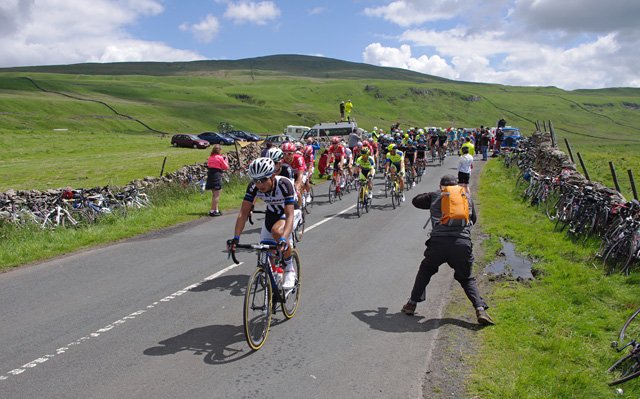
Greg LeMond’s Eight Second Miracle (1989)
In 1986, Greg LeMond became the first non-European to win the Tour de France, breaking decades of continental supremacy. Less than a year later, his career was nearly ended when he was accidentally shot during a hunting trip. He lost massive amounts of blood, and more than 40 shotgun pellets remained permanently lodged in his body, some near his heart.
By 1989, LeMond was back, locked in an epic duel with two time Tour champion Laurent Fignon. The two traded the yellow jersey across three weeks of relentless racing.
Going into the final stage, a 24.5 kilometer individual time trial from Versailles to the Champs-Élysées, Fignon held a 50 second cushion. Conventional wisdom dictated that the gap was too wide to bridge over such a short distance.
LeMond took a revolutionary technical gamble, equipping his bike with aerodynamic clip on handlebars and a rear disc wheel. Tucking into a tight aerodynamic position, he averaged a staggering 54.55 km/h, blistering through the streets of Paris.
Fignon collapsed at the finish line in tears. LeMond took the yellow jersey by just eight seconds, the narrowest winning margin in the history of the Tour de France.
Roger Walkowiak: The Misunderstood Champion (1956)
The 1956 edition arrived during a transitional era. Three time champion Louison Bobet was sidelined by injury, and the peloton had no clear master.
Enter Roger Walkowiak, a working class rider of Polish descent racing for the regional Nord-Est-Centre squad. Walkowiak was not a flamboyant climber or a dominant sprinter; instead, he rode with calculating intelligence. He slipped into opportunistic breakaways, limited his losses in the high mountains, and defended his position with quiet grit.
By the time the race reached Paris, Walkowiak was wearing the yellow jersey, becoming one of the rare riders to win the Tour de France without claiming a single stage victory.
Rather than being celebrated, his triumph was derided. The French press coined the dismissive phrase “gagner à la Walko” (“to win like Walkowiak”), implying that he had won by fluke rather than class. The stigma wounded Walkowiak so deeply that he avoided discussing his achievement for years.
Decades later, Bernard Hinault offered a ringing defense of Walkowiak’s tactical masterclass:
“No one has the right to say that the Tour was handed to him. He didn’t steal it. The Tour doesn’t come wrapped up like a present.”
Walkowiak’s victory stands as a poignant reminder that Grand Tour glory is as much about tactical conservation as outright brute force.
Where Speed Meets Survival
There is nothing gentle about Le Tour. Over three weeks, riders sustain average speeds exceeding 40 km/h over cobblestones, gravel, and mountain passes.
On the Alpine descents, speeds touch 100 to 110 km/h on two tires no wider than a thumb, turning downhill sections into acts of controlled freefall. It demands razor sharp reflexes and absolute nerve.
Bernard Hinault captured the absurdity and peril best:
“An amateur should think long and hard before attempting one of these Tour de France stages. Two would probably necessitate visiting a doctor, and three would require a psychiatrist, any more and you should be checking if that person has written a will!”
From the windswept slopes of Mont Ventoux to the thin air atop the Col du Tourmalet, the Tour de France remains sport at its most visceral: a theater of courage, strategy, and sheer human endurance.
Up next in Part 2: The steep climbs, brutal weather, and sheer unpredictability of Italy’s Giro d’Italia.