
A break from the daily grind was long overdue. A 300-kilometre drive from Bangalore brought me to Chikmagalur, the birthplace of Indian coffee.
Two well-spent days later, it was time to head back. The holiday had been blissfully unhurried—walking through coffee plantations and gazing up at Mullayanagiri, the highest peak in Karnataka. But before returning to Bangalore, a small detour beckoned.
About 35 kilometres from Chikmagalur, deeper into the Deccan Plateau, lie the twin towns of Halebeedu and Belur. Once the epicentre of the Hoysala dynasty, which ruled much of present-day Karnataka from the early 11th to the early 14th century, these towns are living museums of medieval South Indian grandeur.
The Hoysala legacy
The Hoysalas, like many dynasties of their time, built an agrarian society with a robust system of governance. They defended and expanded their territories through military might, encouraged art and literature, and witnessed the rise of new schools of social and religious thought. The era produced visionaries like Basava and Madhvacharya, whose influence endures to this day.
Perhaps the most enduring legacy of the Hoysalas, however, is their architecture. The temples of Belur and Halebeedu remain shining examples of this distinctive style. A style clearly differentiated from the Cholans in architectural style, building materials, and floor plans. Today, these monuments attract throngs of tourists every weekend. For many visitors, they are little more than pit stops—brief breaks from routine—often without discovering the rich history carved into every stone.
My stop, however, was different.
The temple I was about to visit belonged to the same Hoysala era and was built around 1100 AD. Beyond that, the similarities with the more famous temples of Belur and Halebeedu more or less end there.
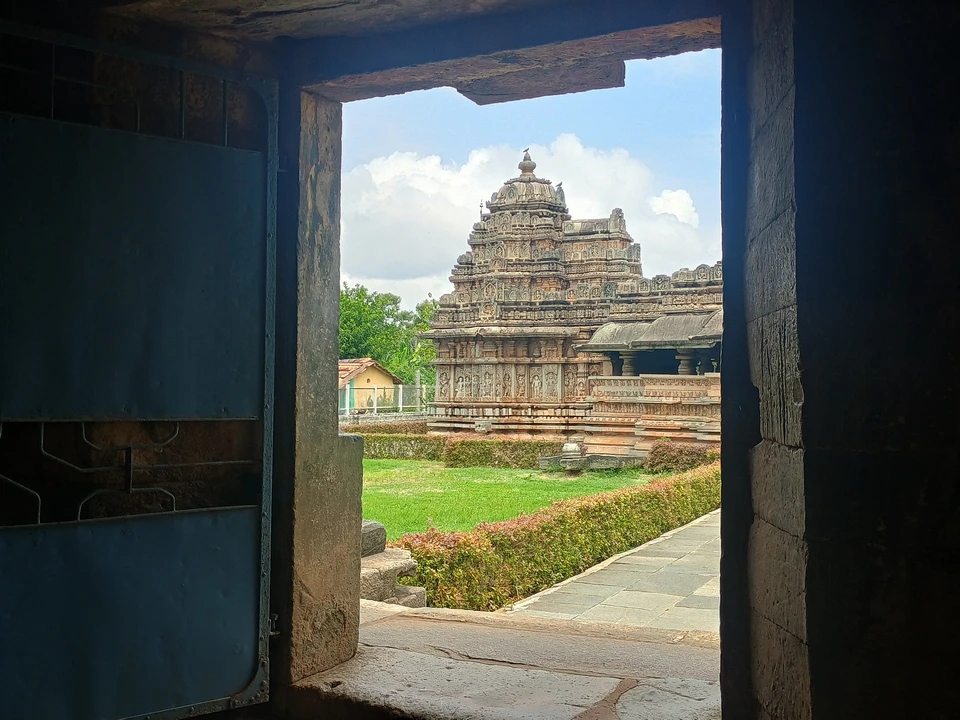
Roughly 30 kilometres east of Belur, away from the tourist circuit, in the village of Belavadi, stands the Sree Veeranarayana Temple, a magnificent structure dating back to the early 12th century. Tucked between humble village homes, the temple is built almost entirely of pale soapstone. The surroundings are tranquil. Villagers go about their day, cows gaze lazily into the distance, and goats wander along the narrow path separating the temple from the nearby houses.
There are no tourists to be seen. Not one.
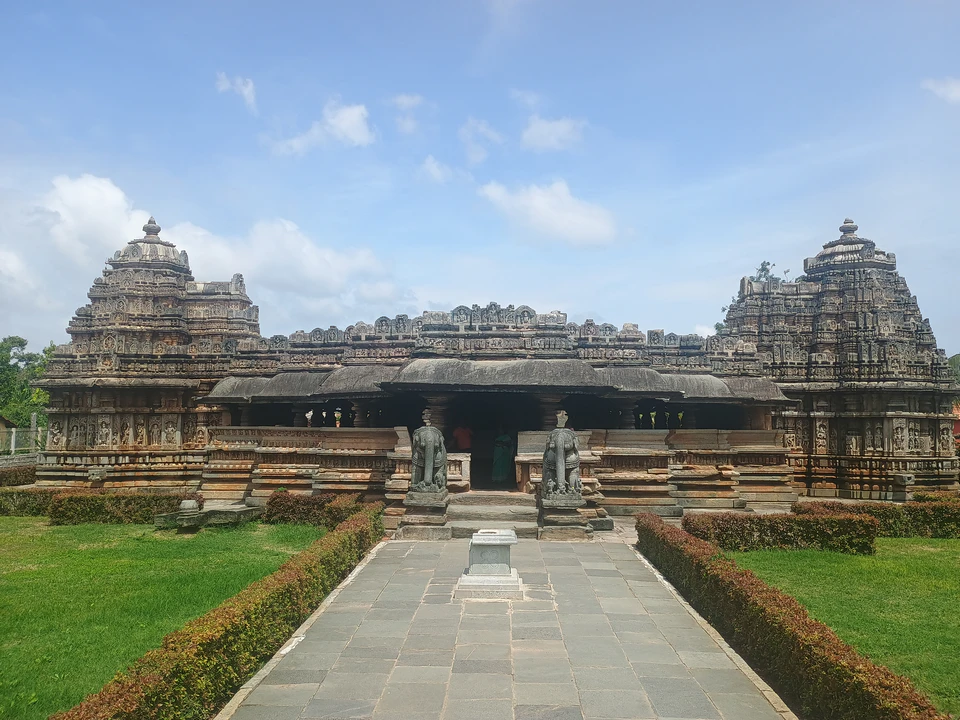
The Sree Veeranarayana temple
Believed to have been built around 1100 AD during the early Hoysala period, the temple is something of an outlier within the Hoysala architectural tradition. It is a trikuta, or three-shrined temple, unlike the better-known temples at Belur and Halebeedu. Historians believe it began as a single shrine dedicated to Lord Veeranarayana (Vishnu), with two additional shrines added later. These are dedicated to Venugopala (Lord Krishna) and Yoga Narasimha, a meditative form of Lord Vishnu.
The original shrine is relatively plain in comparison, while the later additions display a stunning range of intricate carvings. Their style and craftsmanship reflect the evolution of mature Hoysala architecture. The spacious hall is supported by 108 beautifully finished pillars, remarkable for their polish considering they were carved almost a thousand years ago.
The outer shrines flank a corridor nearly 300 feet long. At the entrance stand two sculpted elephants that appear to be straining to pull the temple forward.
From the entrance to the main deity, seven doorways must be crossed.
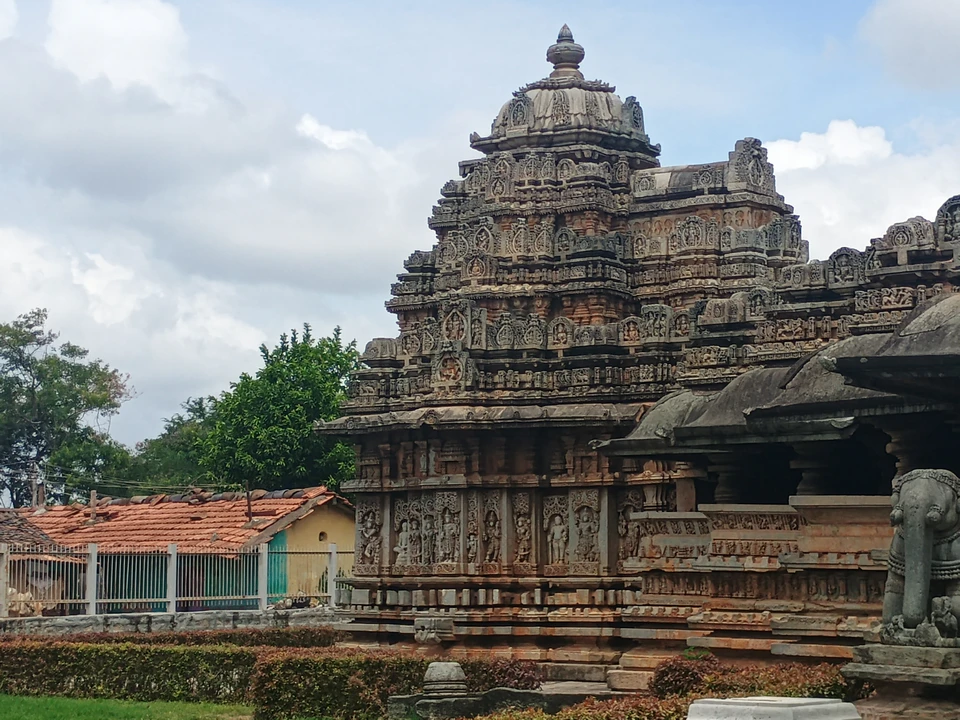
The temple priest, a man with a soulful and contented expression, explains one of the temple’s most remarkable features. On the morning of the March equinox, the rising sun’s rays travel the entire length of the corridor and fall directly upon the main deity.
It makes one wonder about the depth of astronomical and architectural knowledge possessed by a society that flourished nearly a thousand years ago.
While the layout, carvings, and finely polished pillars immediately draw your attention, it is the idols that truly make this temple exceptional.
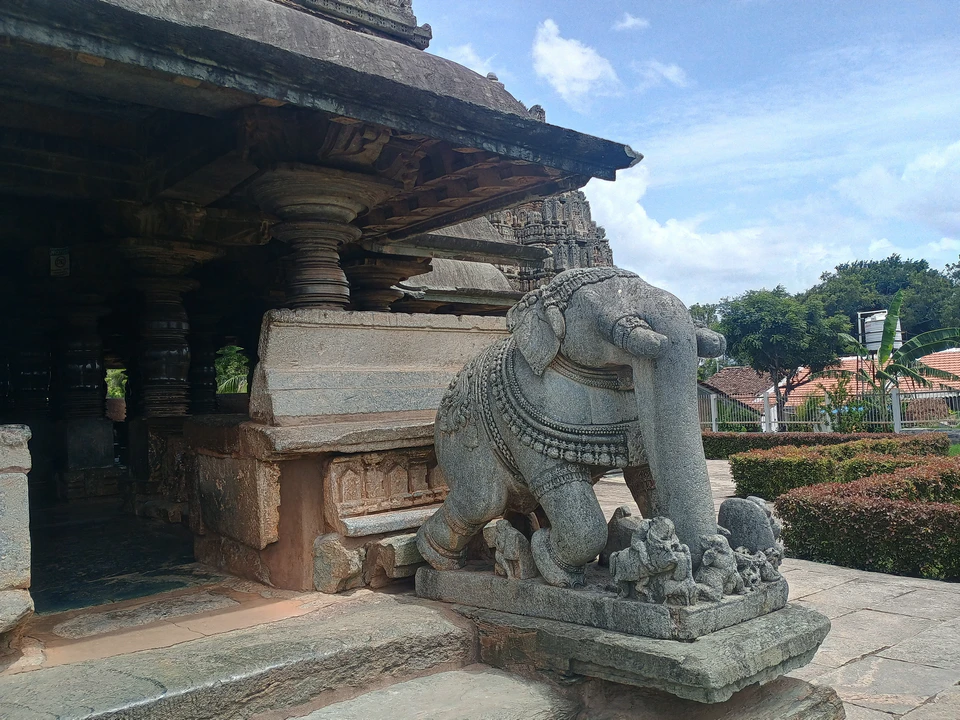
All three principal idols are carved from black shaligrama stone, a sacred fossil stone revered in Hinduism as a manifestation of Lord Vishnu. Each idol is a masterpiece, depicting the deity in different forms, surrounded by exquisitely carved figures and ornamental details.
The oldest shrine houses an eight-foot-tall idol of Lord Veeranarayana with four arms. It is a breathtaking example of Hoysala craftsmanship.
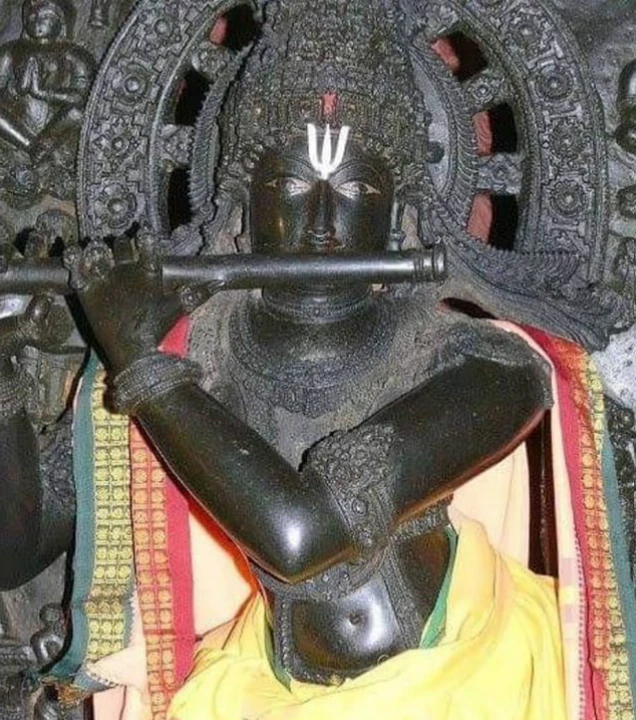
One of the later shrines is dedicated to Venugopala, or Lord Krishna. The idol is often regarded as one of the most beautiful depictions of Krishna in India. Standing gracefully while playing his flute, Krishna is surrounded by intricately carved sages and gopikas. Photography inside the sanctum is now prohibited. Images on the internet offer only a glimpse; they do little justice to the beauty of the sculpture.
The third shrine, to the north, houses Yoga Narasimha, portraying Lord Vishnu in peaceful meditation after the slaying of Hiranyakashipu.
One could spend hours admiring the artistry that surrounds the temple. The silence and serenity are difficult to leave behind.
Eventually, though, it is time to begin the drive back to the madness of a society that often seems trapped in perpetual turmoil. The detox is complete, and everyday life awaits once again.
There are still no tourists as we leave the temple. As we drive away, it lingers in the rear-view mirror for a few fleeting moments before quietly disappearing.
The village remains sleepy. Time seems to stand still, and life ambles on in the embrace of history, divinity, and simplicity.
Hare Krishna